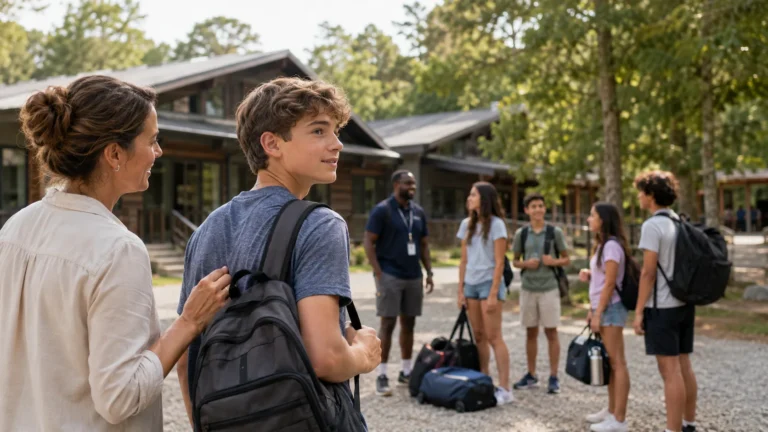


Parents often want a number when deciding on a first residential camp.
Is 12 too young? Is 13 the best age for sleepaway camp? Should you wait until 15 or 16 when your teenager is more independent?
There is no single age that works for every child.
Age matters, but a first sleepaway camp also requires emotional readiness, basic independence, comfort asking adults for help, willingness to share space with other campers, and genuine interest in attending.
A confident younger camper may be better prepared than an older teenager who strongly dislikes the idea of staying away from home.
The better question is not simply, "How old should my child be?" It is: "Is my child ready for the level of independence this particular camp expects?"
Quick Answer: What Is the Best Age for Sleepaway Camp?
There is no universal best age for sleepaway camp. For teenagers, the decision is usually less about reaching a specific birthday and more about whether the child can manage basic routines, spend time away from parents, ask adults for help, follow group schedules, and genuinely wants to attend.
A teen may be ready for their first sleepaway camp when they can:
- Manage basic hygiene and daily routines
- Spend some time away from parents
- Ask a responsible adult for help
- Follow a shared schedule
- Look after basic belongings
- Cope with ordinary disappointments
- Share accommodation respectfully
- Accept that they may occasionally miss home
- Show genuine interest in attending
Nervousness does not automatically mean a teenager is not ready. A teen can be excited about camp and still feel worried about roommates, making friends, travelling, unfamiliar food, or sleeping away from home.
Why There Is No Universal Best Age for Sleepaway Camp
Two teenagers of the same age can respond very differently to residential camp.
One 13-year-old may already have experience with school trips, sports tours, sleepovers, and staying with relatives. They may comfortably organize their belongings and approach teachers when they need help.
Another 13-year-old may never have slept away from their parents and may need more preparation before joining a residential programme.
The same applies to older teenagers.
Being 15 or 16 does not automatically mean someone is comfortable with shared bedrooms, new social groups, different food, group schedules, reduced contact with home, travelling internationally, or following instructions from unfamiliar adults.
Age gives parents useful context, but it cannot replace an assessment of the individual child.
Parents comparing international programmes can also read Embassy Camp's guide to the best age for an international summer camp.
What Does a First Sleepaway Camp Look Like at Different Ages?
Parents often compare age groups because expectations naturally change as children become more independent. These ranges are practical considerations, not fixed rules.
More Structure May Help
A highly structured programme with clear supervision, predictable routines, and accessible staff may be easier for a younger first-time camper than a programme expecting significant independence.
Growing Independence
Early teenage years often bring greater responsibility and social independence, but readiness still depends on the individual rather than the age group alone.
Older Does Not Mean Fearless
Older teenagers may manage practical routines more easily, but first-time nerves about roommates, social groups, travel, and missing home can still be completely normal.
A useful distinction is this:
"I want to go, but I'm nervous because I've never done this before" often suggests a teenager may need preparation.
"I don't want to go, but you are making me" deserves more discussion before booking.

7 Signs Your Teen May Be Ready for Their First Sleepaway Camp
The best age for sleepaway camp becomes easier to judge when parents look at behaviour rather than birthdays.
1. They Genuinely Want to Attend
Your teenager does not need to be enthusiastic about every detail, but there should usually be something about the experience that appeals to them, such as travel, new friends, language learning, activities, or greater independence.
2. They Can Spend Time Away From You
Previous overnight experience can be useful, but the real question is whether your teenager can eventually settle into another environment and continue participating.
3. They Can Manage Basic Personal Routines
Residential camp includes supervision, but campers should have reasonable age-appropriate independence with hygiene, clothes, belongings, sleep routines, and simple schedules.
4. They Know How to Ask an Adult for Help
A prepared camper should be willing to tell a leader when they feel unwell, lose something, have a roommate problem, feel homesick, or simply do not know what to do.
5. They Can Handle Small Problems Without Giving Up
Campers do not need perfect emotional control. They need enough flexibility to pause, seek help where necessary, and move forward after ordinary setbacks.
6. They Can Live With Group Rules
Wake-up times, meals, curfews, room rules, phone policies, excursions, and safety procedures all require cooperation with the group.
7. They Understand That Missing Home Is Normal
Homesickness can happen to confident campers. Missing home does not automatically mean the camp was the wrong decision.
Parents can prepare in more detail using Embassy Camp's summer camp homesickness guide.
Signs It May Be Better to Wait
Sometimes the answer is not "no." It is "not yet."
- Your teenager consistently says they do not want to attend.
- They become extremely distressed whenever separation is discussed.
- They cannot yet manage basic personal routines appropriate to their age.
- They refuse to approach adults when they need help.
- They expect parents to solve every small problem remotely.
- They have little understanding of what residential camp involves.
- They find ordinary group rules extremely difficult.
- They have had no meaningful role in choosing the programme.
Do not use one concern as an automatic reason to cancel camp. Look for a pattern.
Sometimes changing the programme length, destination, accommodation style, age group, or level of supervision can make the experience more appropriate.
Is 12, 13, 14, 15 or 16 a Good Age for a First Sleepaway Camp?
Is 12 Too Young?
Not necessarily. A 12-year-old who wants to attend, manages basic routines, can ask adults for help, and is comfortable spending time away from parents may be ready for a well-structured residential programme.
Is 13 or 14 a Good Age?
It can be. Early teenage years often bring greater independence, but parents should still assess motivation, practical skills, previous overnight experience, and the level of supervision provided.
Is 15 or 16 Too Late?
No. An older teenager may actually appreciate camp more because they have clearer interests, stronger social skills, and greater independence. Programme fit matters as much as readiness.
Age vs Readiness: Which Matters More?
Age Answers
"Is this programme designed for someone my child's age?"
Readiness Answers
"Can my child manage the emotional, practical, and social expectations of this programme?"
Both matter, but they answer different questions.
Age helps determine which programmes are appropriate. Readiness helps determine whether your child is prepared to participate in them.
For a first sleepaway camp, that combination is more useful than searching for one perfect birthday.
How Long Should a First Sleepaway Camp Be?
There is no universal ideal length for a first residential programme.
A shorter programme may feel more manageable for a teenager who is interested but has limited overnight experience.
A longer programme may be perfectly reasonable for a teenager who is comfortable away from home, has travelled before, strongly wants to attend, adjusts well to new environments, and is joining a structured programme suited to their age.
A very short programme is not automatically easier. The first few days often involve adjustment, so the programme should still provide enough time for the teenager to settle into routines, activities, and friendships.
Rather than choosing length only by age, ask the organizer how first-time campers usually adjust to that particular programme.

Day Camp or Sleepaway Camp for a First-Time Camper?
Some teenagers want the social and activity experience of camp but are not yet comfortable sleeping away from home.
Day camp can be a useful alternative. The teenager still experiences group activities, new instructors, social interaction, structured schedules, and new skills, but returns home afterward.
Sleepaway camp adds another layer: shared accommodation, morning and evening routines, greater independence, extended time with peers, and reduced parental involvement in everyday decisions.
Neither format is automatically better. Parents comparing the two can read Teen Day Camps vs Boarding Camps: A Parent's Quick Guide.
How Can Parents Prepare a Teen for Their First Overnight Camp?
Let Your Teen Help Choose the Programme
Show them the accommodation, activities, destination, programme duration, age group, daily schedule, and excursions. Ask what excites them and what worries them.
Practice Small Responsibilities
Before departure, let your teenager pack an overnight bag, organize toiletries, prepare clothes, keep track of a schedule, carry belongings, and manage small amounts of spending money.
Discuss Communication Before Camp
Explain when they can contact home and how parents will receive updates. Avoid promising constant access if the programme has structured phone rules.
Talk About Problems Before They Happen
Discuss what to do if they feel homesick, lose something, are unsure where to go, or have a problem with a roommate. The first step will often be speaking with a responsible adult at camp.
What Should Parents Ask Before Booking a First Sleepaway Camp?
Embassy Camp Perspective: Match the Programme to the Teen
Finding the best age for sleepaway camp is only part of the decision.
The first residential experience should also match the teenager's confidence, interests, travel experience, and need for structure.
A first-time camper may benefit from:
- Clear daily routines
- Age-appropriate groups
- Defined residential supervision
- Accessible group leaders
- Organized activities
- Clear parent communication
- Structured travel support
- A programme length they understand in advance
A more experienced teenager may be comfortable with greater independence.
This is why parents should compare programmes individually instead of choosing only by destination or age.
Final Thoughts: Choosing the Best Age for Sleepaway Camp
There is no birthday that automatically makes a teenager ready for residential camp.
The best age for sleepaway camp is the point when your child has enough independence to manage everyday routines, enough confidence to ask for help, enough emotional flexibility to cope with temporary separation, and enough personal interest to want the experience.
Age still matters because programmes should be developmentally appropriate. But readiness and programme fit tell you far more than age alone.
Before booking, ask yourself:
- Does my teenager genuinely want to go?
- Can they manage basic daily routines?
- Can they approach adults for help?
- Can they cope with ordinary setbacks?
- Do they understand what residential camp involves?
- Does this particular camp provide the structure they need?
If those answers are positive, your teenager may be ready for their first sleepaway camp, even if both of you are still a little nervous.
Find a Programme That Fits Your Teen
Compare age ranges, destinations, activities, accommodation, and programme formats before deciding on a first residential camp.
FAQs About the Best Age for Sleepaway Camp
What is the best age for sleepaway camp?
There is no single best age for sleepaway camp. For teenagers, independence, interest in attending, previous separation experience, ability to ask for help, and programme structure are usually more useful indicators than age alone.
Is 12 too young for sleepaway camp?
Not necessarily. A 12-year-old who wants to attend, manages basic routines, can ask adults for help, and is comfortable spending time away from parents may be ready for a well-structured residential programme.
Is 13 a good age for a first overnight camp?
It can be. Many 13-year-olds are developing greater independence, but parents should still assess individual maturity, previous overnight experience, motivation, and the level of supervision provided by the camp.
Is 15 too old for a first sleepaway camp?
No. Teenagers can attend their first residential camp at 15, 16, or later. Starting at an older age may suit a teenager who was previously uncomfortable with being away from home or who has only recently become interested in camp.
How do I know if my teenager is ready for sleepaway camp?
Look for several signs together: genuine interest in attending, basic personal independence, ability to spend time away from home, willingness to ask adults for help, ability to follow group routines, and reasonable resilience when small problems occur.
What if my child wants to go but feels nervous?
Nervousness is normal before a new experience and does not automatically mean your child is unprepared. Explore what specifically worries them, explain how the programme works, and make sure they know who can help them once they arrive.
Should a first sleepaway camp be short?
A shorter programme can feel manageable for some first-time campers, but there is no ideal duration for everyone. Consider your child's previous experience, confidence away from home, enthusiasm for the programme, and how long the camp recommends for first-time participants.
Should my child try day camp before sleepaway camp?
They do not have to. Day camp can be useful for a child who wants the activities and social experience but is not yet ready to stay overnight. Other children are comfortable moving directly into a supervised residential programme.