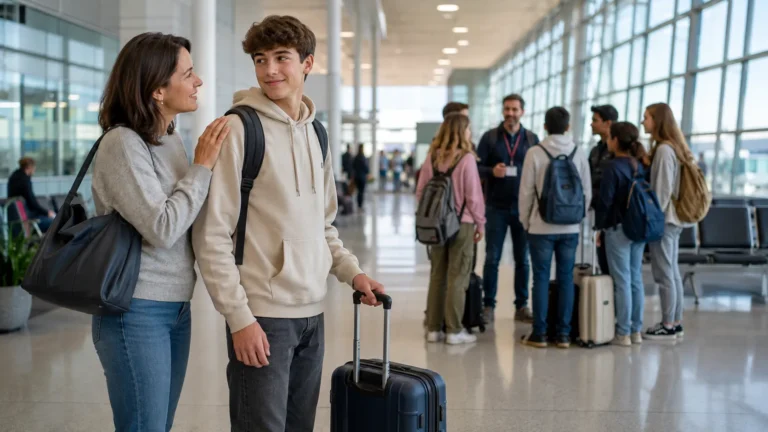


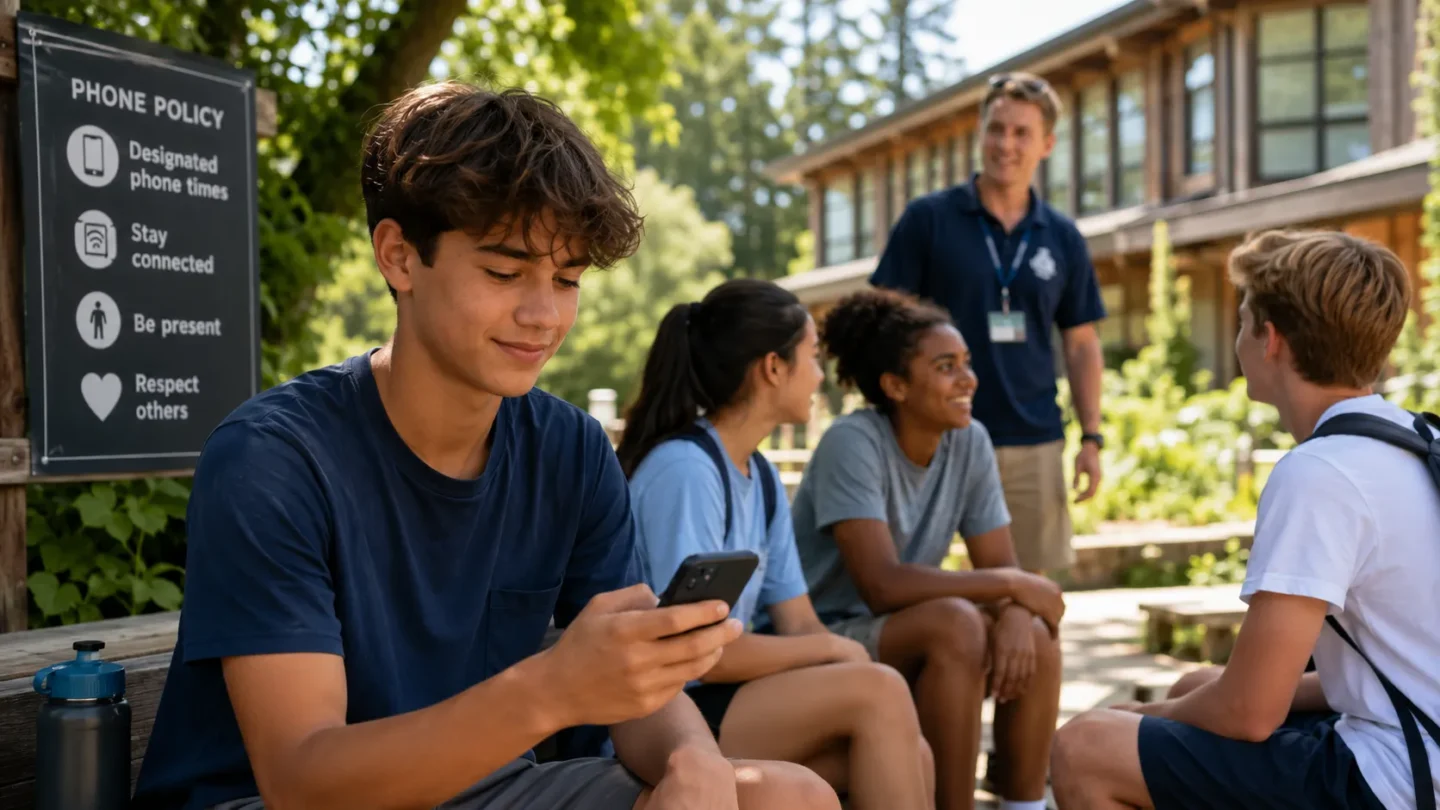
Your child has arrived at summer camp. A few hours pass, and there is no message. You check your phone again. Still nothing.
For parents who are used to being able to contact their teenager instantly, this can feel strange. Yet a summer camp phone policy may limit when campers use their devices, especially during classes, excursions, meals, group activities, or evening routines.
There is no single phone rule followed by every summer camp. Some programmes allow phones during free time, some provide scheduled access, and others restrict personal devices more significantly.
The most important thing is not having unlimited access to your child's phone. It is understanding the communication system before departure, knowing when contact is expected, and having a reliable way to reach the camp if you genuinely need assistance.
Quick Answer: How Often Should Parents Contact Their Child at Summer Camp?
Parents should follow the camp's phone rules and agree on contact expectations before departure. Some programmes allow regular evening phone access, while others restrict personal devices and provide updates through staff or another parent communication channel.
A practical approach is to know:
- When campers are allowed to use phones
- Whether students keep their devices
- Whether parents should expect direct messages
- How arrival confirmation is sent
- Who parents contact when they have a concern
- How emergencies are communicated
More contact is not automatically better, and less direct contact does not automatically mean that communication is poor.
The American Camp Association advises families to agree on calling expectations before camp and to respect a camp's no-phone-call policy when one applies.
What Is a Summer Camp Phone Policy?
A summer camp phone policy explains when, where, and how campers can use personal mobile devices during the programme.
Depending on the camp, the policy may cover:
- Whether smartphones are permitted
- Whether campers keep their phones throughout the day
- Whether devices are stored by staff
- Phone use during classes or workshops
- Phone use during excursions
- Phone use during meals
- Evening access
- Wi-Fi availability
- Social media use
- Photography and video rules
- Phone use inside shared accommodation
- Lost or damaged devices
- Parent calls
- Emergency phone access
A useful summer camp phone policy should answer one basic parent question: "If I cannot reach my child directly, how do I reach the people responsible for them?"
For a broader look at arrival confirmation, parent updates, emergency contact, and group leader communication, read Parent Communication During Summer Camp.
Why Do Some Summer Camps Limit Phone Use?
Keep Campers Engaged
Notifications and messages can interrupt lessons, sports, excursions, workshops, meals, and team activities.
Encourage In-Person Interaction
Free time can become an opportunity to talk with roommates, join activities, and build new friendships instead of returning immediately to home-based chats.
Support Independence
Camp can give teenagers space to solve small everyday problems, ask leaders for help, and make simple decisions without immediately calling home.
Protect Evening Routines
Late-night calls, videos, and notifications can disturb roommates and interfere with shared accommodation routines.
Protect Privacy
Phones are also cameras. Camps may restrict photography and video use in bedrooms, changing areas, or other shared spaces.
How Often Should You Call Your Child at Summer Camp?
There is no universal number of calls that works for every camper.
The right amount of contact depends on the child, programme, duration, and summer camp phone policy.
| Situation | Practical Approach |
|---|---|
| Arrival day | Follow the camp's arrival-confirmation process. Avoid repeated calls while the child is checking in and settling. |
| First-time camper | Agree on a predictable check-in pattern if the camp permits direct calls. |
| Experienced teenager | Allow more independence if they are comfortable and the programme has clear parent updates. |
| Homesick camper | Coordinate with camp staff rather than relying only on repeated emotional calls home. |
| Short programme | Fewer personal calls may be needed, especially when the schedule is busy. |
| Longer programme | Scheduled contact may be more useful than frequent unscheduled messages. |
This is guidance, not a universal rule. The camp's actual communication policy should always come first.
Should Parents Call Their Child Every Day?
Not necessarily.
Daily contact may be completely appropriate at a programme that allows evening calls. At another camp, daily calls may conflict with the communication structure families agreed to before departure.
Instead of asking only, "Should I call every day?", consider:
- Does the camp allow it?
- Does my child expect it?
- Does the contact help them feel supported?
- Does it repeatedly interrupt activities?
- Does my child become more upset after calls?
- Are camp staff already providing regular updates?
A predictable arrangement is usually easier for both parent and child than repeatedly deciding whether to call.
What If the Camp Has a No-Phone Policy?
"No phone" can mean several different things.
Ask What "No Phone" Actually Means
- Campers should not bring phones
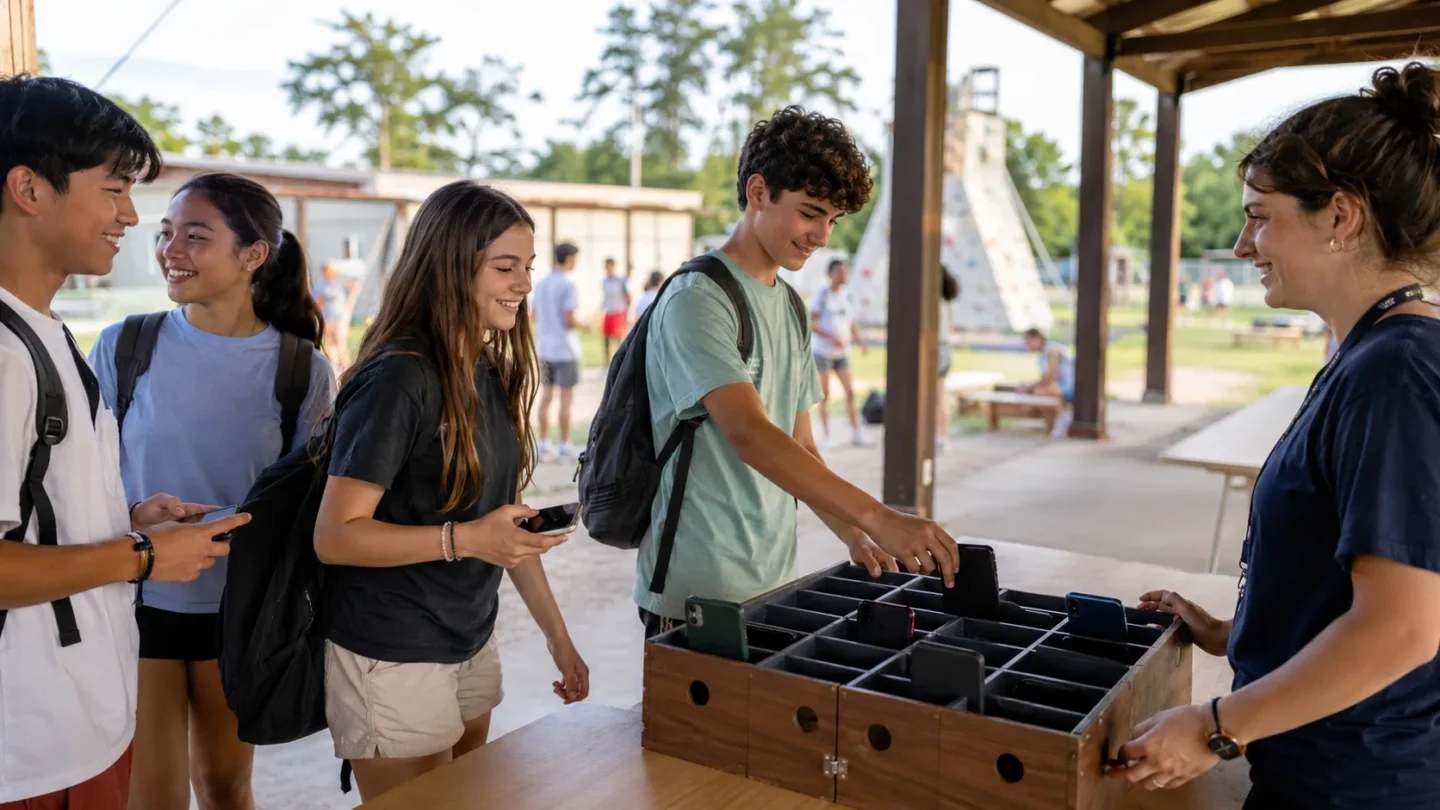
- Phones are collected on arrival
- Devices are stored during activities
- Phones are returned during specific periods
- Phones are allowed only on travel days
- Direct parent calls are restricted except in agreed circumstances
If personal phones are restricted, parents should still know how they receive updates, how to contact staff, what happens in an emergency, and whether children can request a call when necessary.
What Should I Do If My Child Does Not Reply?
A missed message is not automatically a warning sign.
There are many everyday reasons a camper may not respond immediately, including activities, excursions, phone storage, limited Wi-Fi, a low battery, meals, social time, or simply forgetting to check the device.
- Check the summer camp phone policy and confirm whether your child should have phone access at that time.
- Wait until the normal communication period if the camp uses scheduled access.
- Check official camp updates or arrival messages.
- Use the designated parent contact if an expected check-in has been missed and you remain concerned.
- Use the emergency contact route when the situation is genuinely urgent.
Urgent communication should never depend only on whether a teenager happens to see a personal message.
Phone Calls and Homesickness: Can More Contact Make Adjustment Harder?
The effect can vary by child.
A teenager may call home because they had a difficult hour, disagreed with a roommate, disliked dinner, or suddenly missed their family. A distressed call gives parents only one moment from an entire camp day.
Instead of immediately promising to collect your child, ask what happened, whether they have spoken to their group leader, how the rest of the day has been, and what activity comes next.
If needed, contact camp staff separately for context about how your child is eating, sleeping, participating, and adjusting.
For more detailed guidance, read Summer Camp Homesickness: How Parents Can Help Before and During Camp.
What About WhatsApp, Photos, Video Calls and Social Media?
A summer camp phone policy should cover more than traditional phone calls.
Modern smartphones give campers access to messaging, video calls, social media, cameras, group chats, games, and location sharing.
Parents should ask:
- Can campers use messaging apps?
- Can parents video call?
- Is camp Wi-Fi available?
- Are students allowed to post photographs?
- Can they photograph roommates?
- Is social media restricted during programme hours?
- Are phones permitted during excursions?
- Are devices stored overnight?

When Should the Camp Contact Parents?
Parent-to-child contact and camp-to-parent communication are not the same thing.
Even if campers have limited personal phone access, parents should understand when the programme itself will contact them.
- Significant illness
- Injury
- Emotional distress
- Behavioural concerns
- Travel disruption
- Missing documentation
- Medical treatment
- A situation requiring parental consent or input
- Emergency circumstances
ACA guidance recommends that camps define communication parameters with families, including circumstances in which parents can expect to be contacted.
15 Questions to Ask About a Summer Camp Phone Policy
Create a Family Phone Plan Before Camp
Parents and teenagers can avoid many misunderstandings by agreeing on a simple phone plan before departure.
Before Departure
"We'll follow the camp's phone rules." Make sure your child understands that family preferences do not override programme rules.
On Arrival
"Send a short message if you're allowed. If the camp confirms arrival, we won't repeatedly call while you're settling in."
During Camp
"We'll use the agreed check-in periods instead of messaging throughout the day."
If You're Homesick
"Talk to your group leader if you need support, then contact us according to the camp's communication process."
If Something Important Happens
"Use the camp's staff and emergency procedure rather than relying only on messages to us."
Does Age Change How Often Parents Should Make Contact?
Age matters, but maturity and experience matter too.
Consider whether your child has stayed away from home before, travelled internationally, attended camp previously, feels comfortable asking adults for help, or has experienced homesickness.
A younger but experienced camper may need less reassurance than an older teenager who has never spent a night away from home.
What Are the Red Flags in a Camp Phone and Communication Policy?
Limited phone use itself is not necessarily a red flag. Poor communication is.
Embassy Camp Perspective: Connection Without Constant Contact
For international summer camps, parents need two things at the same time: confidence that their teenager can participate independently and confidence that support is available when needed.
A practical summer camp phone policy should make several things clear before departure:
- When students can use their phones
- Whether phones are restricted during activities
- How arrival confirmation works
- How parents receive updates
- Who the main parent contact is
- What happens when a child does not reply
- How medical or emotional concerns are communicated
- Which number parents should use in an urgent situation
The goal should not be constant contact. It should be reliable contact.
Final Thoughts: Finding the Right Balance
The best summer camp phone policy is not necessarily the policy that gives campers the most screen time or parents the most opportunities to call.
It is the one families understand before departure.
Parents should know when their child can use a phone, when they can reasonably expect contact, how camp updates are provided, and who to call when they have a genuine concern.
At the same time, teenagers should have enough space to participate in activities, form new friendships, solve small everyday problems, and experience some independence from home.
Agree on expectations before camp, follow the programme's rules, and remember one important principle: even when you cannot reach your child's personal phone immediately, you should always know how to reach the camp.
Compare Camp Communication Before You Book
When comparing programmes, ask about phone access, parent updates, accommodation, supervision, and emergency communication together rather than looking at phone rules in isolation.
FAQs About Summer Camp Phone Policy
Can children keep their phones at summer camp?
It depends on the programme. Some camps allow campers to keep phones but restrict their use during activities. Others store devices and provide access during specific periods. Parents should confirm the exact summer camp phone policy before booking.
How often should parents call a child at summer camp?
There is no universal schedule. Parents should follow the camp's communication policy and agree on realistic expectations with their child before departure. Some families may use scheduled check-ins, while other camps provide updates without regular direct calls.
Should I text my child at camp every day?
Not necessarily. Daily messages may work at some camps, but frequent texting can also interrupt activities or create expectations that the camp's phone rules do not support. Agree on a communication pattern in advance.
What should I do if my child does not answer their phone?
First check whether they are expected to have phone access at that time. Wait until the normal contact period, check official camp updates, and contact the designated camp person if you remain concerned. Do not rely solely on your child's personal phone for urgent communication.
Why do summer camps restrict mobile phones?
Camps may limit phones to reduce interruptions during activities, encourage face-to-face interaction, support shared accommodation routines, protect privacy, and give campers opportunities to practice greater independence.
Can phone calls make homesickness worse?
The effect can vary by child. For some campers, an emotional call home may make it harder to return attention to camp. Parents can listen calmly, encourage the child to speak with camp staff, and contact the camp separately if they need more context.
How can parents contact their child if phones are not allowed?
The camp should provide another communication route, such as a camp office number, group leader, coordinator, parent messaging system, email, or emergency contact. Parents should know this process before their child arrives.