


The first day of summer camp can feel exciting, unfamiliar and emotional at the same time. Teenagers may be wondering who they will share a room with, whether they will make friends and what their camp leaders will be like. Meanwhile, parents usually want reassurance that their child has arrived safely, settled into the accommodation and knows where to ask for help.
Although every camp follows a different schedule, the first 24 hours normally have one clear purpose: helping students move from uncertainty into a safe, structured routine.
This guide explains what usually happens from arrival through the following morning, how staff help campers settle in, what parents can expect and which reactions are normal during this important adjustment period.
What Happens on the First Day of Summer Camp?
The first day of summer camp usually includes arrival support, registration, luggage organization, room allocation, introductions to camp leaders and roommates, a tour of the accommodation, safety instructions, the first group meal and simple activities designed to help students connect.
Parents may also receive confirmation that their child has arrived safely. The evening often includes a relaxed group activity, preparation for the next day and additional staff support for students who feel nervous or homesick.
The exact order varies by programme, destination and arrival time, but a well-organized camp should make every stage clear, supervised and easy to follow.
Why the First 24 Hours Matter
The first 24 hours create the emotional and practical foundation for the rest of the programme. A student is entering a new environment with unfamiliar people, rules, sleeping arrangements, meals and routines. Even confident teenagers may need time to understand where they belong and what is expected of them.
A successful arrival does not require every child to feel instantly comfortable. It means the child begins learning:
- Who is responsible for their group
- Where they will sleep
- How the daily routine works
- Which safety rules they must follow
- How and where to ask for help
- What will happen next
Predictability helps an unfamiliar place begin to feel manageable. Once a child knows the people, spaces and schedule, much of the initial uncertainty usually starts to decrease.

First Day of Summer Camp Timeline
The following example shows what students and parents can generally expect. It is not a fixed schedule because international arrivals, flight times and programme formats differ.
-
Arrival stage
Airport Arrival or Camp Check-In
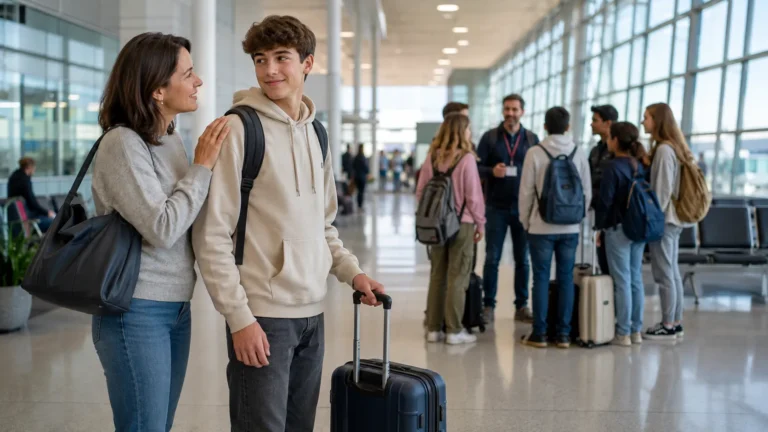
For an international programme, the experience may begin at the destination airport. Students follow the written arrival instructions, meet the designated representative and confirm their identity before joining the transfer group.
Embassy Camp’s guide to airport pickup for teen summer camps abroad explains the practical questions parents should confirm, including the meeting point, covered airport, delay process and emergency contact.
-
Transfer stage
Transfer to the Accommodation
Students usually travel with the group to their hotel, residence, dormitory or campus accommodation. This journey is often the first opportunity to meet other campers, although conversation may begin slowly because everyone is tired or unsure what to say.
Camp leaders can make this stage easier by introducing students, explaining the route, answering immediate questions and helping the group understand what happens after arrival.
-
Family reassurance
Arrival Confirmation for Parents
A clear communication system should confirm that the student has arrived and entered the camp’s care. Depending on the programme, families may receive an email, WhatsApp message, group update, phone call or confirmation after the student reaches the accommodation.
Parents can review Embassy Camp’s guide to parent communication during summer camp before departure so they know who sends updates, how often they are shared and which contact route to use for urgent concerns.
-
Settling in
Room Allocation and Unpacking
Students are shown their room, assigned a bed and introduced to their roommates. They may have time to organize clothing, toiletries, chargers and personal belongings before joining the next group activity.
Room sharing is common at residential programmes. Parents should understand the camp’s policies for room allocation, gender separation, access control and nighttime staff support. These areas are covered in Embassy Camp’s residential summer camp accommodation guide.
-
Orientation
Accommodation Tour and Safety Briefing
Students are normally shown bathrooms, dining areas, meeting points, classrooms, recreation spaces, emergency exits, medical support and areas that are off-limits.
The goal is not to make campers remember every detail immediately. It is to help them move around safely and know which adult can support them.
-
Connection
Meeting Leaders, Roommates and Group Members
Students meet the adults responsible for their group and begin learning the names of roommates and other campers. Welcome games, pair activities, small-group discussions and tours can create low-pressure opportunities to interact.
The purpose is not to force instant friendship. It is to ensure that each student knows at least one adult and begins recognizing the people around them.
-
First evening
First Meal and Welcome Activity
The first shared meal is an important social moment. Staff should make sure that no student is left alone, dietary needs are understood and quieter campers have someone nearby to talk to.
The evening activity is usually simple and inclusive, such as a team game, short walk, welcome presentation, language activity or creative challenge.
-
First night
Bedtime and Preparation for Tomorrow
Students organize their belongings, review the following day’s schedule, prepare for bed and learn whom to contact during the night. Some campers fall asleep quickly, while others need reassurance because bedtime is often when thoughts of home become stronger.
-
Following morning
The First Full Programme Day Begins
Students wake up, prepare independently, eat breakfast, meet their group and begin the first complete day of lessons, activities or excursions. A child who felt emotional at night may feel significantly more comfortable after sleep and breakfast.
What Happens During Summer Camp Check-In?
Once students reach the accommodation, check-in helps them understand the physical environment and practical rules. Staff may confirm names, contact information, dietary requirements, medical details and important documents before directing each student to their room.
Room Allocation
Room assignments may consider age, gender, group organization, room capacity, friendship requests and the camp’s approach to nationality or language mixing. Students should also know who to contact if a roommate concern develops.
Personal Belongings
Campers may be asked to store passports, valuables or medication according to programme rules. Essential documents and medicines should not be packed deep inside checked luggage unless the camp has specifically advised this.
Accommodation Tour
Students are shown the places they will use most frequently. This tour helps answer practical questions before they become stressful, such as where to meet, where meals are served and where a leader can be found.
- Which room and bed are theirs
- Where the bathrooms and dining area are
- When and where the group meets
- Who their main camp leader is
- How to request medical or emotional support
- Which areas require staff permission
Meeting Camp Leaders and New Friends
One of the most important parts of the first day of summer camp is meeting the people who will shape the experience. Students should learn the names of their main group leader, assistant or coordinator and understand which adults are available during activities and at night.
Not every teenager starts talking immediately. Some introduce themselves confidently, while others prefer to observe before joining in. A quiet student may need only one welcoming roommate or one supportive conversation with a leader to begin feeling secure.
Parents can also use Embassy Camp’s international summer camp safety checklist to assess supervision, group-leader access, emergency planning and other operational safeguards before booking.
What Is Covered During Camp Orientation?
Orientation explains how the programme works and what students must do to stay safe. The session may cover:
- Daily meeting times and attendance
- Meals and dietary procedures
- Room rules, curfews and bedtime
- Phone use and parent contact
- Group movement and excursion behaviour
- Emergency and medical procedures
- Respectful conduct and bullying policies
- Restricted areas and approved meeting points
Rules create predictability. When students know where to go, whom to follow and what happens next, they spend less energy worrying about uncertainty.
The First Meal and Welcome Activities
The first meal often gives students their first relaxed opportunity to talk. Camp staff may seat students with roommates, their assigned group or a leader who can help the conversation begin.
A camper may eat less than usual after travel because of fatigue, unfamiliar food or nervousness. One small meal is not automatically a concern, but staff should notice if a student continues refusing food, water or group participation.
First-day activities are usually simple, inclusive and easy to join. They may include a group walk, team-building game, welcome presentation, language activity, cultural introduction or creative workshop.

What If a Child Feels Shy or Overwhelmed?
Feeling quiet, uncertain or emotionally tired during summer camp arrival day is normal. A child may be processing a new country, unfamiliar people, room sharing, different rules, travel fatigue and separation from family at the same time.
A supportive camp leader may:
- Introduce the student to one friendly peer
- Give them a simple practical task
- Invite them into a smaller group
- Explain the schedule privately
- Check in after the first meal
- Help them unpack or locate key areas
- Offer quiet time without leaving them isolated
Parents preparing a child for their first international programme can use Embassy Camp’s guide on how to prepare a teenager for their first international camp to discuss independence, travel expectations, communication and practical readiness before departure.
What If Homesickness Starts on the First Day?
Homesickness can begin immediately, but it often becomes more noticeable when activities stop and the accommodation becomes quiet. A child may ask to go home, complain about the room, become tearful or say that they cannot sleep.
This does not automatically mean that the programme is unsuitable. The child may be tired, overstimulated or missing familiar routines.
Parents and staff should look at the child’s overall behaviour. A camper may sound upset during a short phone call but still participate, eat, talk with roommates and feel better the next morning.
Helpful staff support may include listening calmly, reminding the child what happens next, encouraging one manageable activity, staying nearby at bedtime and checking that the student has eaten, hydrated and spoken to a trusted adult.
What Is the First Night at Summer Camp Like?
The first night at summer camp can be the most emotionally sensitive part of the first 24 hours. During the day, students are occupied by travel, introductions and activities. At bedtime, they finally have time to think about home.
The evening routine may include:
- Returning to the accommodation
- Organizing personal belongings
- Showering and preparing for bed
- Reviewing the next day’s schedule
- Setting an alarm or wake-up plan
- Charging phones in the approved area
- Attending a short room or group meeting
- Quiet conversation with roommates
- Lights-out according to camp rules
One difficult bedtime does not predict the rest of the programme. Many campers feel noticeably more comfortable after sleep, breakfast and the first full day of activity.
What Happens the Next Morning?
The following morning is when camp life begins to feel more real. Students wake up at a scheduled time, prepare independently, eat breakfast, meet their group and begin the first full programme day.
Camp staff may observe whether the child:
- Slept and woke up on time
- Is eating and drinking normally
- Knows where to meet the group
- Is communicating with roommates or peers
- Is ready to participate in the programme
- Needs practical or emotional support
What Should Parents Expect During the First 24 Hours?
Parents should expect a period of limited information. A teenager may not send detailed updates because they are travelling, unpacking, attending orientation, meeting the group, eating, following phone rules or simply tired after the journey.
A delayed personal reply does not automatically mean something is wrong. Use the camp’s official communication process rather than relying only on read receipts, online status or social media activity.
“We are happy you arrived safely. Take your time, follow your group leader and enjoy meeting everyone. We look forward to hearing about your first full day.”
This type of message communicates trust without placing pressure on the child to provide constant updates.
When Parents Should Contact the Camp
Use the official contact process when:
- No arrival confirmation is received within the agreed period
- A flight or transfer detail changes
- The student reports feeling unsafe
- There is a medical concern
- Essential medication or luggage is missing
- The child reports bullying or inappropriate behaviour
- Distress is severe or continues to worsen
- The camp requests parent involvement
How to Prepare Your Child for Arrival Day
Preparation can make the first day of summer camp easier without creating unnecessary anxiety. Before departure, make sure your child knows:
- Who will meet them and where
- Which emergency number to call
- Where they will stay
- What room sharing may be like
- How to request medical or emotional help
- That some nervousness is normal
- That friendships do not need to happen instantly
- What to do if travel plans change
The Embassy Camp Perspective: Structure Creates Confidence
For international campers, arrival day involves more than entering a camp building. Students may move through an airport, meet staff for the first time, travel to the accommodation and join peers from different countries.
That is why structure matters. A strong first day of summer camp should move each student through four clear stages:
I know who is meeting me.
I understand where I am and what happens next.
I have met at least one leader and one peer.
I know where to sleep, when to wake and where to go.
Embassy Camp programmes combine supervised international travel, accommodation, learning, cultural experiences and group activities. Exact arrangements vary by destination, dates and package, so parents should confirm the official itinerary and support process for the programme they are considering.
Plan a Confident First Camp Experience
Explore Embassy Camp programmes or speak with a camp advisor about arrival support, airport pickup, accommodation, supervision and the best programme fit for your child.
Frequently Asked Questions
What happens on the first day of summer camp?
Students usually arrive, register, meet camp staff, move into their room, receive an accommodation tour, attend orientation, eat with the group and participate in a simple welcome activity. The exact order varies by programme.
Will parents receive an update after arrival?
A well-organized international camp should explain its arrival-confirmation process before departure. Updates may be provided through WhatsApp, email, phone or a designated camp contact.
What if my child does not make friends on the first day?
This is normal. Friendship may begin with a roommate conversation, a shared meal or a team activity. Children should not feel pressured to form close friendships immediately.
Is it normal for a child to cry on the first night?
Yes, some children become emotional when the day becomes quiet. Staff should provide reassurance and observe whether the child begins settling into the routine.
Should I call my child on the first evening?
Follow the camp’s communication policy. An unexpected emotional call may make adjustment harder for some children, while a planned message or staff update may be more appropriate.
What if my child says they want to come home?
Listen calmly and ask what happened. Then speak with the camp team before making an immediate decision, unless there is a clear safety or medical concern.
What should my child keep in hand luggage?
Essential items may include travel documents, camp confirmation, emergency contacts, medication, a phone charger, one change of clothes and the accommodation address. Follow the camp’s official packing and travel instructions.
What should parents confirm before arrival day?
Confirm the meeting point, transfer process, emergency numbers, accommodation, room arrangements, parent-update method, medical information, programme schedule and contact rules.
Final Thoughts
The first day of summer camp is designed to turn an unfamiliar environment into a structured and welcoming experience.
During the first 24 hours, students move from arrival and registration to room setup, orientation, group introductions, the first meal, evening activities and their first night away. Some teenagers settle quickly, while others need more time and reassurance.
Parents can help by preparing the practical details, using the official communication system and allowing the child enough space to enter the experience.
A strong arrival process should answer three questions for every camper: Where am I supposed to be? Who can help me? What happens next?
When those answers are clear, the first day of summer camp becomes more than a transition. It becomes the beginning of independence, new friendships and a wider international experience.