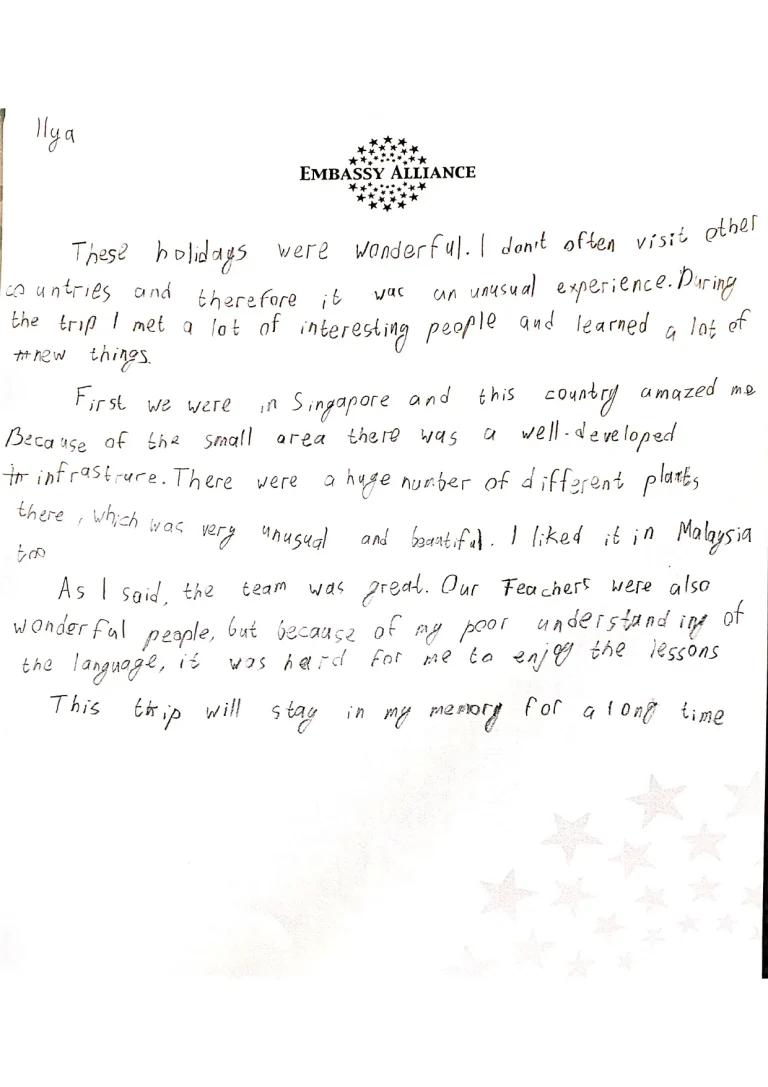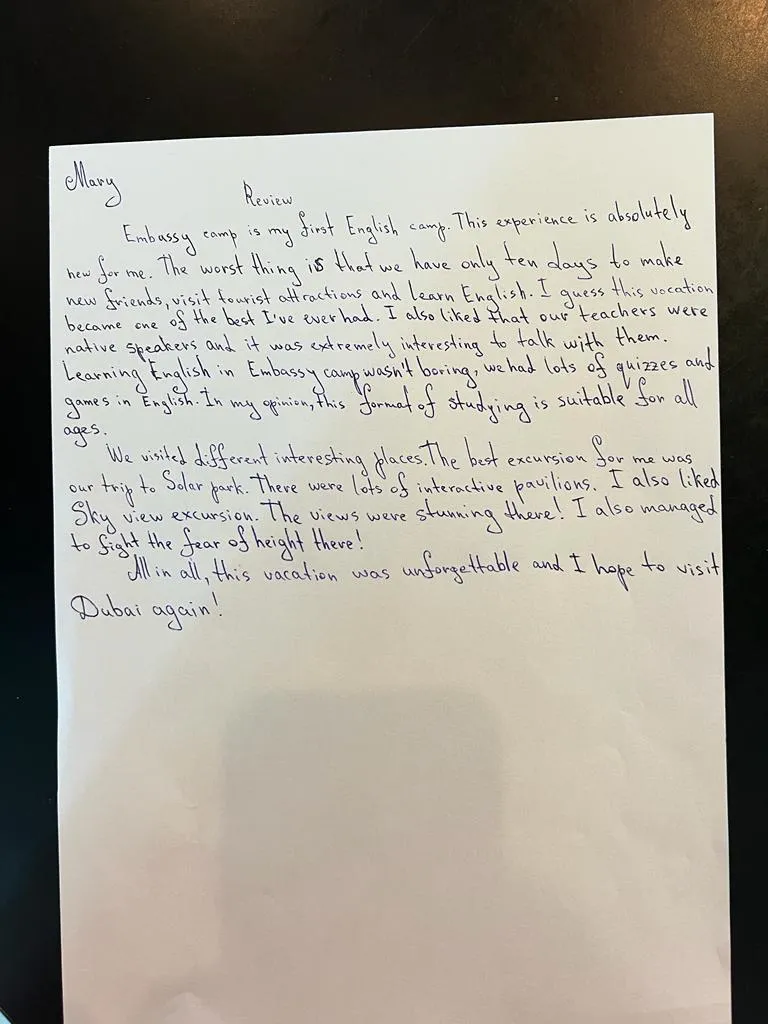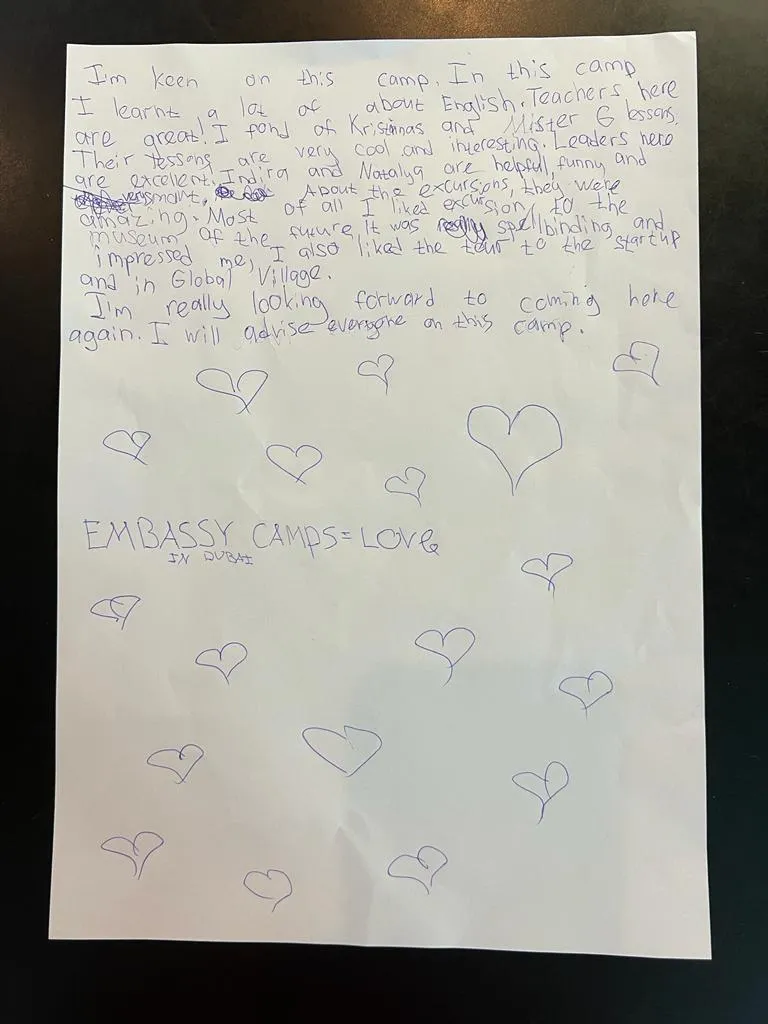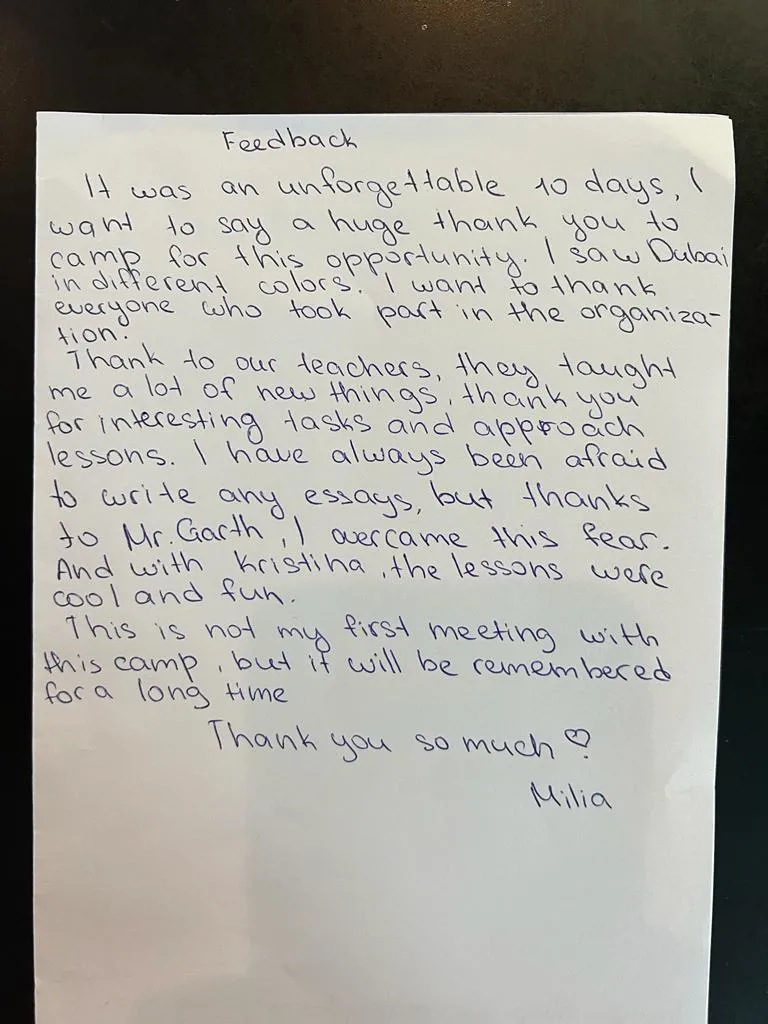



Quick Answer: Are International Summer Camps Safe for Teenagers?
Yes, international summer camps can be safe for teenagers when parents choose a professionally managed program with clear supervision, secure accommodation, airport support, emergency planning and transparent communication. Safety depends less on the destination alone and more on how the camp is organized before, during and after travel.
At Embassy Camp, published safety information highlights 24/7 care by professional group leaders, one camp leader plus one assistant for every 16 students, airport accompaniment, and separate guarded dormitories or hotel floors for male and female participants. Parents should still review the full program details, travel documents, insurance needs and medical information before booking.
For many parents, the biggest concern is not whether a teenager will enjoy an international camp. It is whether they will be safe while living, learning and traveling in another country.
That concern is completely reasonable. A summer camp abroad involves flights, accommodation, group activities, excursions, new friends, unfamiliar food, different routines and temporary independence from parents. The right camp can help teenagers grow in confidence, English communication, leadership and cultural awareness. The wrong camp, or an unclear program, can create stress for both parents and students.
This parent guide explains how to judge teen travel safety, what strong summer camp supervision should look like, how residential camp safety works, and what parents should check before booking an international summer camp.
Why Safety Is the First Question Parents Ask
Parents are not only paying for classes, accommodation and activities. They are trusting another team to care for their child in a different country. That is why the question “are international summer camps safe?” usually comes before questions about price, destination or activities.
A safe international camp should give parents clear answers to practical questions:
- Who supervises students during the day and at night?
- Who meets students at the airport?
- Where do students stay?
- Are boys and girls accommodated separately?
- How are excursions managed?
- What happens if a student becomes unwell?
- How often can parents communicate with the camp team?
- What documents, consent letters or insurance does the student need?
If a camp cannot answer these questions clearly, parents should pause before booking.
What Makes an International Summer Camp Safe?
International summer camp safety comes from structure. A safe program does not rely on luck or vague promises. It uses trained people, clear routines, controlled movement, documented travel plans and parent communication.
| Safety Area | What Parents Should Look For | Why It Matters |
|---|---|---|
| Supervision | Defined staff-to-student ratio, camp leaders, assistants and night support | Students need guidance during lessons, meals, activities, excursions and free time |
| Accommodation | Secure residence, hotel or dormitory with separate areas for male and female students | Residential camp safety depends heavily on controlled accommodation |
| Airport Support | Arrival meeting, airport transfer and departure assistance | First-time teen travelers need support during the most stressful travel moments |
| Excursions | Organized transport, group movement and leader accompaniment | Excursions should be educational and enjoyable without unnecessary risk |
| Medical Readiness | Emergency contacts, health information, insurance guidance and access to care | Parents need to know how the camp responds if a student is sick or injured |
| Parent Communication | Clear contact process before and during the program | Parents feel safer when they know who to contact and when updates are shared |
How Embassy Camp Approaches Student Safety
Embassy Camp places safety as a core part of its boarding camp model. On its official website, Embassy Camp states that professional group leaders take care of children 24/7, and that every group of 16 students has one camp leader and one assistant attached to them.
The website also states that camp leaders accompany participants from dozens of airports, and that male and female participants stay in separate guarded dormitories or hotel floors. These details are important because they answer three of the biggest parent concerns: supervision, airport travel and accommodation safety.
Embassy Camp safety points parents should note
- Professional group leaders care for students 24/7.
- Each group of 16 students has one camp leader and one assistant.
- Camp leaders accompany students from selected airports.
- Male and female participants stay in separate guarded dormitories or hotel floors.
- Programs combine learning, activities and cultural experiences in a supervised structure.
Parents can explore the main Embassy Camp international summer camps page or read more about the organization on the About Embassy Camp page.
Summer Camp Supervision: What Parents Should Expect
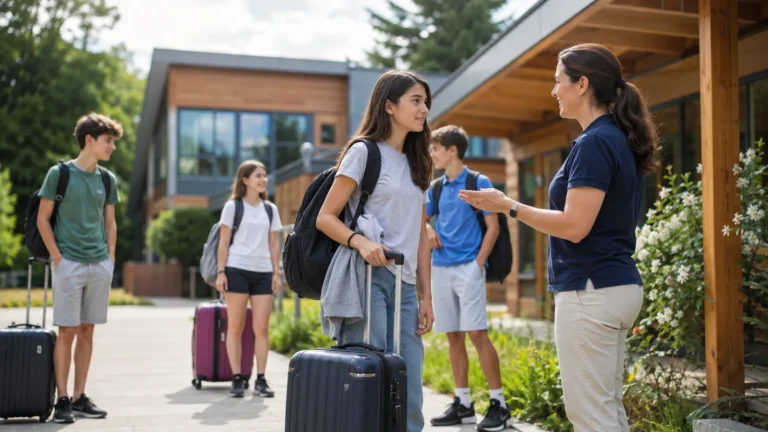
Strong summer camp supervision is more than having adults nearby. It means students are guided through a full daily rhythm, from waking up and attending classes to joining activities, moving between locations, eating meals and returning to accommodation.

For teenagers, good supervision should feel supportive, not restrictive. They need enough freedom to build independence, but enough structure to stay safe and responsible.
A good supervision model usually includes:
- Named camp leaders responsible for each student group
- Clear check-in points during the day
- Controlled attendance during lessons and excursions
- Evening routines and curfew rules
- Accommodation monitoring
- Emergency contact procedures
- Communication between camp staff and parents when needed
This is especially important for first-time teen travelers who may be confident socially but inexperienced with international routines.
Residential Camp Safety: Accommodation, Meals and Daily Routine
Residential camp safety is one of the most important parts of any international program. Teenagers are not only attending classes. They are living away from home, often for one or more weeks, so the accommodation environment must be organized and age-appropriate.
Parents should ask where students stay, who monitors the residence or hotel, how rooms are assigned, whether boys and girls are separated, and whether students can leave the accommodation independently.
Accommodation questions parents should ask
- Is accommodation inside a residence, hotel, dormitory or campus?
- Are male and female students accommodated separately?
- Are camp leaders staying nearby or on site?
- Are visitors restricted?
- What is the evening curfew?
- How are room changes or roommate concerns handled?
- Who should a student contact at night if they need help?
Meals also matter. Parents should confirm whether the camp can support allergies, halal requirements, vegetarian meals or other dietary needs. Any medical or dietary information should be shared before the program starts.
Airport and Travel Safety for Teenagers
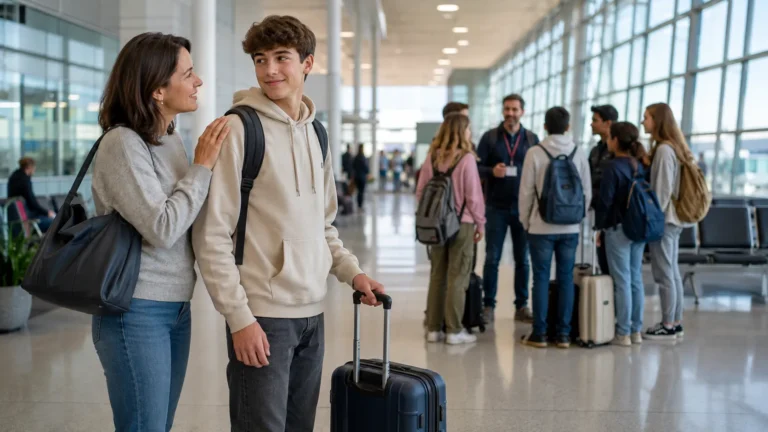
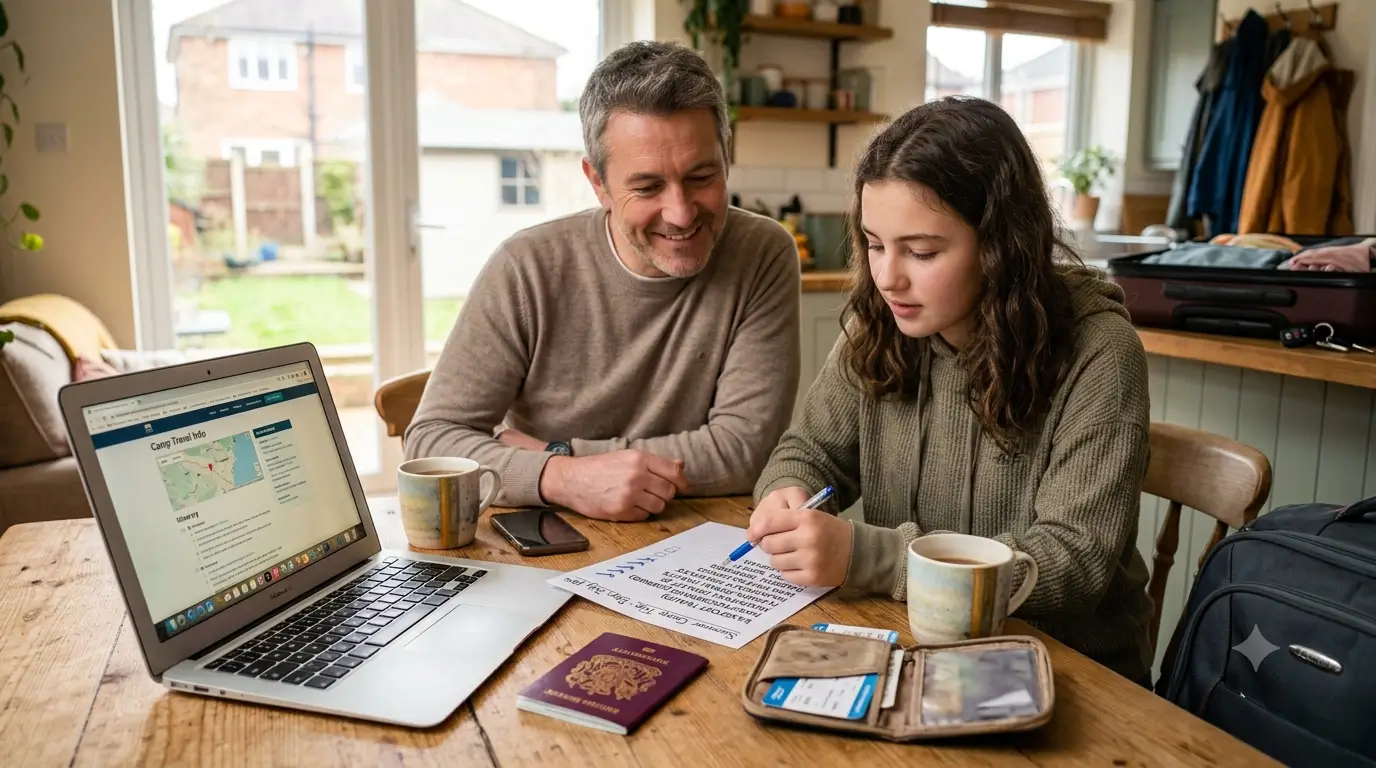
Airport travel is often the most stressful part of an international camp for parents and students. A teenager may need to manage immigration, baggage, arrival procedures and meeting the camp team in a new country.
Embassy Camp says its camp leaders accompany participants from dozens of airports, which is a strong trust point for families planning a camp abroad. Parents should still confirm the exact airport support available for their chosen destination and arrival date.
Parent travel document checklist
Before departure, parents should check the student’s passport validity, destination entry requirements, visa needs, consent letter requirements, emergency contacts and travel insurance. Official travel sources advise families to review passport validity early and confirm whether a child traveling with a guardian or alone needs a signed consent letter.
How Safe Are International Summer Camps for First-Time Teen Travelers?
For first-time teen travelers, an international summer camp can be safer than independent travel because students move within a planned group, follow a fixed schedule and are supported by adult leaders.
This is one reason many parents choose a structured program rather than sending teenagers abroad independently. A supervised camp gives teenagers a real sense of independence while keeping the journey organized.
A first-time teen traveler may benefit from:
- Airport support on arrival and departure
- A ready-made student group
- Daily schedules
- Adult leaders for activities and excursions
- Safe accommodation routines
- Clear rules around movement and curfew
- Parent communication channels
Parents comparing options can also read Embassy Camp’s guide on how to choose the right international summer camp.
What Age Is Best for a Safe International Camp?
The best age depends on the student’s maturity, travel experience, emotional readiness and the structure of the program. Many international camps are designed for teenagers because they can follow instructions, join group activities, manage basic personal routines and communicate their needs.
Embassy Camp pages commonly list programs for children and teens, with some programs showing age ranges such as 09 to 19 or 12 to 18 depending on the destination and camp type. Parents should check the age range on the specific camp page before booking.
| Age Group | Safety Consideration | Parent Tip |
|---|---|---|
| 9 to 11 | Needs stronger routine, emotional support and close supervision | Choose a highly structured camp with clear accommodation support |
| 12 to 14 | Good age for first international camp if the child is emotionally ready | Prepare the student with travel rules, communication habits and packing practice |
| 15 to 17 | Can handle more independence but still needs boundaries and guidance | Look for leadership, English, AI or cultural programs with supervised freedom |
| 18 to 19 | May be ready for more advanced programs and greater responsibility | Confirm whether the camp treats older students as minors or young adults |
Destination Safety: Does the Country Matter?
Yes, the destination matters, but it is only one part of the decision. Parents should look at both the country and the camp’s operating system. A popular destination can still feel stressful if the camp is poorly organized, while a well-managed program can make a new destination feel safe and easy to understand.
Embassy Camp offers international camp destinations such as Malaysia, Singapore, Dubai, Bali, Qatar and Korea. Each destination should be compared based on supervision, accommodation, transfer arrangements, daily schedule, medical access and the student’s comfort level.
What Parents Should Check Before Booking
Before paying a deposit, parents should request written confirmation of the safety and supervision details. This protects both the family and the camp because everyone understands expectations before travel.
Booking safety checklist
- Confirm the exact camp destination and dates.
- Check the age range and student profile.
- Ask for the staff-to-student supervision structure.
- Confirm accommodation type and security arrangements.
- Ask whether boys and girls stay separately.
- Confirm airport pickup and drop-off details.
- Ask how excursions are supervised.
- Share medical, allergy and dietary information early.
- Check passport, visa and consent letter requirements.
- Buy suitable travel insurance before departure.
- Ask for emergency contact details.
- Review payment, cancellation and refund terms.
The UK government advises travelers to buy appropriate travel insurance before international travel, including cover for medical conditions and planned activities. Parents should review this carefully because international medical or emergency costs can be expensive without suitable cover.
Red Flags Parents Should Avoid
Most international camps are created with good intentions, but parents should still be careful. A professional camp should be able to explain how it protects students.
Be cautious if a camp:
- Cannot explain who supervises students
- Does not provide accommodation details
- Has no clear airport arrival process
- Gives vague answers about medical support
- Does not explain curfew or evening rules
- Cannot provide a program schedule
- Does not ask for health or dietary information
- Pushes parents to pay before answering safety questions
Parents should not feel uncomfortable asking questions. Safety is a normal and necessary part of the decision.
Do Safety Rules Limit Teen Independence?
Good safety rules do not remove independence. They create the conditions for healthy independence. Teenagers can still make friends, speak English, explore a new culture, lead group activities and build confidence within a safe framework.
This is the balance parents should look for. A camp should not feel like uncontrolled travel, and it should not feel like a rigid school trip with no personal growth. The best international summer camps give teenagers freedom with boundaries.
Embassy Camp Perspective: Safe Growth, Not Just Safe Travel
The real value of an international camp is not only that teenagers return home safely. It is that they return home more confident, more independent and better prepared for the future.
Embassy Camp combines supervised travel with educational and personal development experiences. Depending on the program, students may join English learning, AI-related activities, smart skills training, leadership tasks, cultural excursions and team-building experiences.
For parents asking “are international summer camps safe for my child?”, the better follow-up question is: “Does this camp have the right systems to help my child grow safely?”
If the answer includes clear supervision, secure accommodation, airport support, parent communication and meaningful learning outcomes, the camp is easier to evaluate with confidence.
Need Help Choosing the Safest Camp Destination?
Every child is different. Some are ready for a busy city destination, while others need a more structured first-time camp experience. Speak with an Embassy Camp advisor to compare destinations, supervision, accommodation and the best program fit for your child.
FAQs About International Summer Camp Safety
Are international summer camps safe for teenagers?
International summer camps can be safe for teenagers when the program has trained leaders, clear supervision, secure accommodation, airport support, emergency planning and parent communication. Parents should check the camp’s staff-to-student ratio, accommodation rules, medical support and travel procedures before booking.
How safe are international summer camps for first-time teen travelers?
A structured international camp can be a good first travel experience because students are not traveling independently. They follow a planned schedule, stay in supervised accommodation and join activities with leaders and other students. Parents should choose a camp with airport support and clear daily supervision.
What age is best for an international summer camp?
The best age depends on the child’s maturity and the camp structure. Many teenagers between 12 and 17 are ready for international camps if they can follow instructions, communicate basic needs and manage daily routines. Younger students may need a more structured program with closer support.
What should parents check before booking a residential camp?
Parents should check accommodation type, rooming rules, male and female separation, night supervision, medical support, meal arrangements, emergency contacts, airport transfers and excursion supervision. They should also review passport, visa, consent letter and travel insurance requirements before departure.
Does Embassy Camp provide summer camp supervision?
Embassy Camp states that professional group leaders care for students 24/7 and that a group of every 16 students has one camp leader and one assistant. Its website also mentions airport accompaniment and separate guarded accommodation areas for male and female participants.
Are students allowed to go out alone during camp?
This depends on the program rules and destination. For teen travel safety, parents should ask whether students can leave accommodation independently, what curfew applies, how shopping trips are supervised and how attendance is checked during excursions.
Is travel insurance necessary for international summer camps?
Yes, parents should arrange suitable travel insurance before international travel unless the camp clearly includes it. Insurance should match the destination, program length, planned activities and the student’s medical needs. Parents should read the policy carefully before departure.
How can parents prepare a teenager for safe travel abroad?
Parents should teach their teen how to keep documents safe, follow group rules, contact the camp leader, manage pocket money, respect curfew, report discomfort early and avoid leaving the group without permission. Simple preparation makes the first international camp experience safer and less stressful.
Final Thoughts
So, are international summer camps safe for teenagers? They can be, when parents choose a program with strong supervision, secure accommodation, organized transfers, clear communication and responsible travel planning.
Safety should never be assumed from a beautiful destination or a polished brochure. Parents should ask direct questions, compare supervision details and choose a camp that explains how students are cared for from arrival to departure.
Embassy Camp’s published safety structure, including 24/7 care, group leaders, assistant support, airport accompaniment and separate guarded accommodation areas, gives parents important points to review when comparing international summer camp options.
Need help choosing the right camp?
Speak with an Embassy Camp advisor and compare the safest destinations, supervision options and program structure for your child.
Talk to a Camp Advisor