

Your child's first trip without parents is an important step toward greater independence, but it can feel just as significant for the family staying at home. Even when the trip is supervised, parents may wonder whether their child will manage their belongings, remember important information, cope with unfamiliar routines, communicate when something is wrong, or know what to do if plans change.
Good preparation does not mean planning for every possible problem. Instead, it means helping your child understand the trip, manage everyday responsibilities, recognize when they need assistance, and know which trusted adult to approach.
Whether your teenager is joining an international summer camp, school trip, supervised group tour, or another organized programme, the following preparation can make their first experience away from parents feel much more manageable.
Quick Answer: How Do You Prepare a Child for Their First Trip Without Parents?
Prepare your child by reviewing the journey together, practicing everyday independence, organizing required documents, discussing money, agreeing on communication expectations, preparing for homesickness, and making sure they know whom to contact if something goes wrong.
Before departure, your child should ideally understand:
- Where they are going
- Who is responsible for the group
- Where they will stay
- How they will reach the destination
- Where important documents are kept
- How to manage basic personal belongings
- How much spending money they have
- When they can contact home
- Who to approach if they feel sick, lost, worried, or uncomfortable
They do not need to handle every situation alone. One of the most useful skills for a first trip without parents is knowing when to ask a responsible adult for help.
Start Preparing Before the Suitcase Comes Out
Parents often begin preparation by creating a packing list. Packing matters, but understanding the trip comes first.
Sit down with your child and review the programme together.
- Destination
- Travel dates
- Flight or transport arrangements
- Accommodation
- Group leaders
- Daily schedule
- Activities and excursions
- Room arrangements
- Meal arrangements
- Phone rules
- Meeting points
- Emergency procedures
Show your child photographs of the accommodation and destination where available. Walk through the itinerary rather than simply sending it to their phone.
Familiarity removes some of the uncertainty around a new experience.
If your child is attending residential camp, Embassy Camp's Residential Summer Camp Accommodation Guide for Parents can also help families understand what shared camp accommodation may involve.
10 Ways to Prepare Your Child for Their First Trip Without Parents
Preparation should involve your child rather than happening entirely around them. These ten steps focus on the skills and information they are most likely to use while away.
Make Sure They Understand the Travel Plan
Do not assume your child knows what will happen simply because you booked everything.
Walk through the journey from beginning to end.
For example:
Home → airport → check-in → flight → arrival → meeting point → transfer → accommodation.
Explain who will be with them at each stage and which adult becomes responsible for the group.
If the journey includes a connection, separate transfer, immigration process, or meeting point, make sure your teenager understands that too.
They do not need to memorize every flight number or address. They should, however, know where to find that information.
Make Important Information Easy to Access
Your child should know the basic details of their trip and where important contact information is stored.
Useful information may include:
- Parent or guardian contact numbers
- Programme organizer contact
- Group leader contact
- Accommodation details
- Flight information
- Meeting point
- Emergency contact
- Travel insurance details, if applicable
- Required medical information
Consider keeping essential information in more than one appropriate place so your child is not dependent entirely on one phone.
For example, they might have contact information stored on their phone while also carrying a simple printed information card.
The aim is not to give them a folder full of paperwork. It is to make the few details they could genuinely need easy to find.
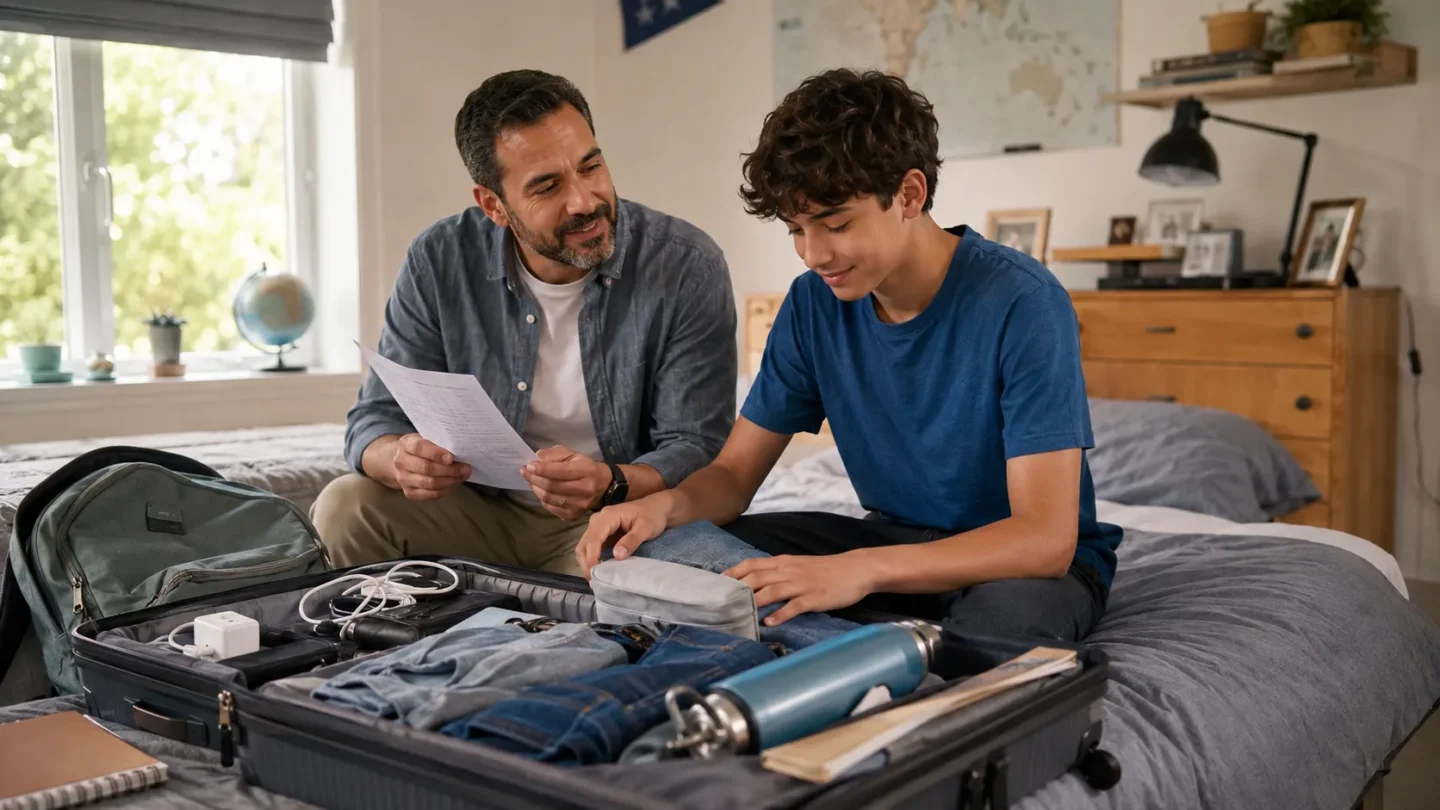
Let Your Child Pack With You
Packing for a first trip without parents is part of the preparation process.
If parents pack every item themselves, the teenager may arrive without knowing what they brought or where anything is located.
Let your child take responsibility for much of the packing while you supervise the final check.
They can organize:
- Everyday clothing
- Shoes
- Sleepwear
- Toiletries
- Chargers
- Reusable water bottle
- Day bag
- Personal items
- Programme-specific equipment
- Required medication according to the programme's procedures
Ask them questions during packing: "Where did you put your charger?", "Which bag contains your toiletries?", and "Where will you keep your important documents?"
This gives them a mental map of their own luggage.
For outdoor or camp-based trips, Embassy Camp's Camping Essentials Checklist can provide additional ideas, although families should always follow the specific packing list supplied by their programme.
Practice Managing Money Before Departure
For many teenagers, a trip away is one of their first opportunities to manage spending money more independently.
Discuss the budget before they leave.
Teach them to:
- Understand how much they can spend each day
- Keep emergency money separate from everyday spending money
- Store cash and cards securely
- Avoid carrying unnecessary amounts of money
- Check prices before buying
- Keep track of what they spend
- Tell a responsible adult promptly if a card or wallet is lost
If they are travelling internationally, introduce them to the local currency before departure.
The goal is not perfect budgeting. It is basic awareness and responsibility.
Practice What to Do When Something Goes Wrong
Parents cannot predict every situation, but they can teach a simple problem-solving approach.
Try short scenarios at home.
A useful general response is:
- Stay calm.
- Remain somewhere safe.
- Find the designated group leader, programme staff member, or another appropriate responsible adult.
- Explain clearly what happened.
- Follow the agreed communication procedure if a parent needs to be contacted.
The important lesson is that encountering a problem does not mean the trip has failed.
Knowing how to seek help is part of travelling independently.
Discuss Safety Without Making the Trip Feel Frightening
A safety conversation should make a child feel prepared, not afraid.
Focus on practical habits:
- Stay with the group where required.
- Follow programme and staff instructions.
- Learn meeting locations.
- Keep valuable belongings secure.
- Do not wander away without permission.
- Tell staff if something feels wrong.
- Know which adults are responsible for the group.
- Ask questions when instructions are unclear.
For a structured summer programme, parents can also use Embassy Camp's International Summer Camp Safety Checklist for Parents to review supervision, accommodation, emergency procedures, communication, transport, and other areas before booking.
Agree on Communication Before the Trip
Communication can become a source of unnecessary stress when parents and teenagers have different expectations.
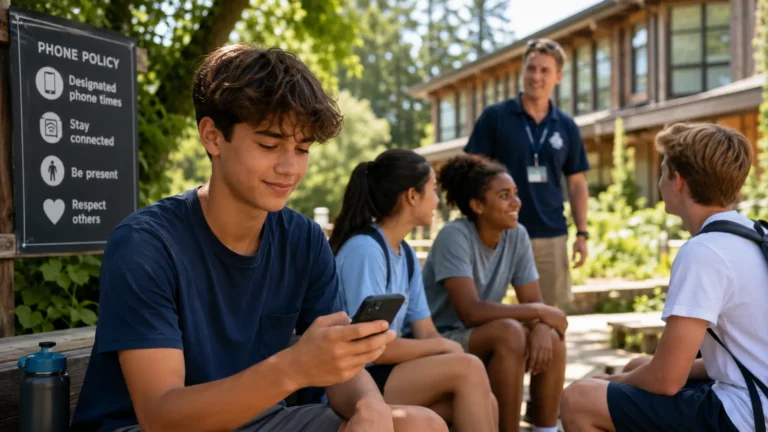
A parent may expect a message every evening. A teenager may assume they can call whenever they want. The programme may have its own phone policy.
Discuss this before departure.
Ask the organizer:
- Can students keep their phones?
- Are phones restricted during lessons or activities?
- When can children contact parents?
- Will parents receive an arrival confirmation?
- Who contacts the family if something important happens?
- What is the emergency communication procedure?
Then agree on reasonable expectations with your child.
Constant messaging can distract a teenager from participating fully in the experience, while having no idea when communication will happen can make both sides uncomfortable.
A clear arrangement is usually more helpful than improvising once the trip has started.
Parents considering a residential programme can read Parent Communication During Summer Camp: How Families Stay Connected for a more detailed look at arrival updates, phone access, staff communication, and emergencies.
Talk About Homesickness Before It Happens
A teenager can genuinely want to travel and still miss home.
They may miss parents, siblings, friends, pets, familiar food, their bedroom, or their usual routine.
That does not automatically mean they made the wrong decision.
Talk about homesickness before the trip without suggesting that it will definitely happen.
If it does, encourage your child to:
- Speak with their group leader
- Join the next planned activity
- Spend time with other participants
- Maintain the programme routine
- Avoid spending all their free time messaging home
- Give themselves time to adjust
Parents should also understand how the programme handles homesickness before departure.
Our Summer Camp Homesickness: A Practical Parent Guide explains what parents can do both before camp and while their child is away.
Practice Everyday Independence at Home
One of the easiest ways to prepare for a first trip without parents is to let your child practice small responsibilities before departure.
Depending on their age, they can begin managing tasks such as:
- Waking up using their own alarm
- Preparing clothes for the following day
- Organizing toiletries
- Packing a day bag
- Keeping track of keys or access cards
- Following a schedule
- Ordering their own meal
- Speaking directly with a teacher or instructor
- Carrying and organizing their own luggage
- Managing a small amount of money
These tasks may appear minor, but they closely resemble the everyday decisions teenagers make while travelling.
Parents do not need to suddenly remove all support. Gradual responsibility is enough.
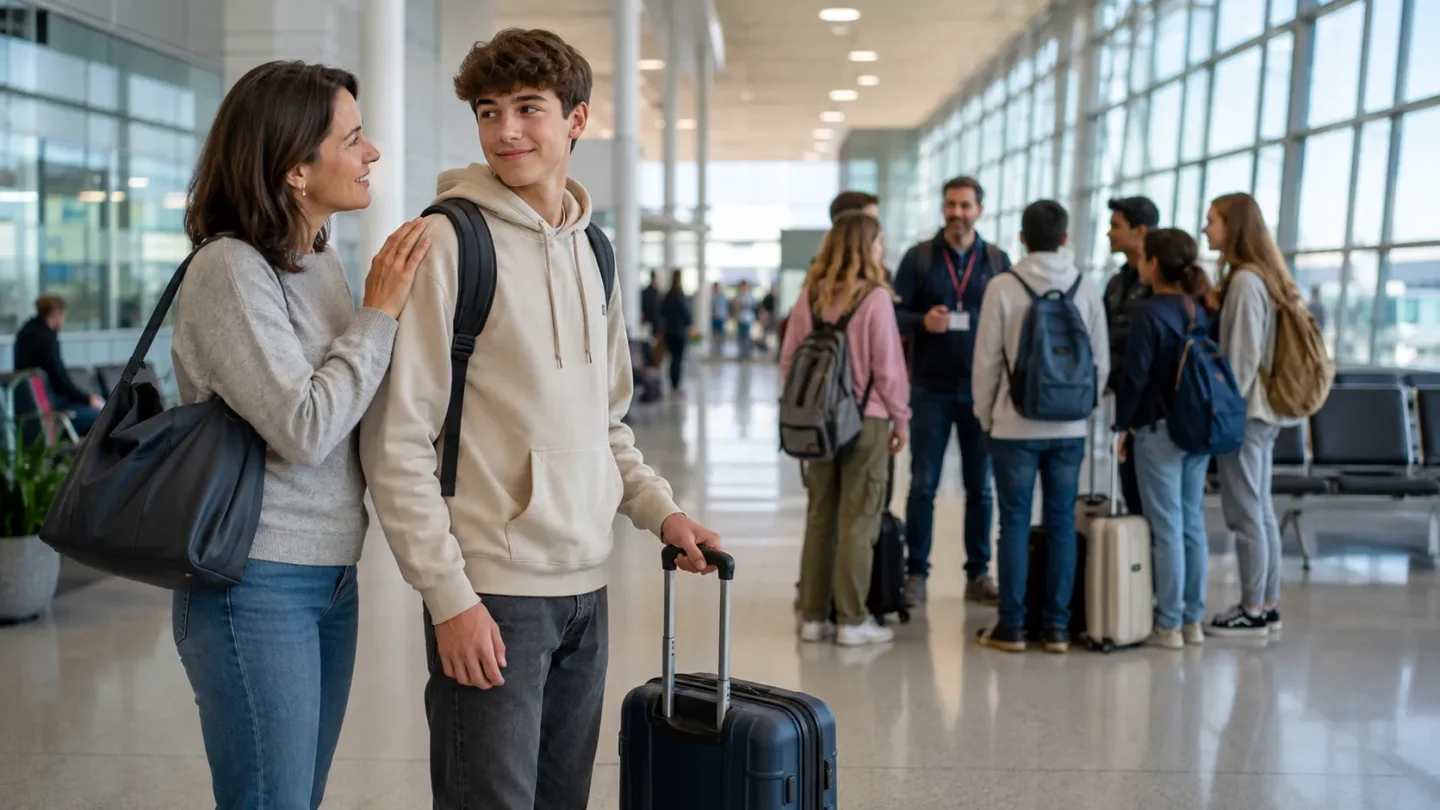
Keep the Goodbye Calm and Positive
Departure can be emotional for everyone.
Your child may be excited right up until the moment it is time to leave. Parents who have felt confident throughout the preparation may suddenly feel nervous too.
Try to keep the goodbye supportive.
- "I know you know who to ask if you need help."
- "Enjoy the experience."
- "We're looking forward to hearing about it."
- "You've prepared well for this."
Avoid turning the final few minutes into another long safety briefing.
The preparation should already be complete.
A calm goodbye communicates that the family understands this is a significant step but believes the child can manage it with the support available.
What Travel Documents Should Parents Prepare?
Document requirements are one area where families should avoid relying on generic online checklists.
For international travel, requirements can depend on the child's nationality, destination, transit countries, airline, visa status, who is accompanying the child, and the laws of the countries involved. Some countries require written or notarized parental permission when a minor travels alone or with someone who is not their parent or legal guardian. Requirements are not universal.
Depending on the journey, documents may include:
- Valid passport
- Required visa or entry authorization
- Flight or transport documents
- Programme confirmation
- Parental consent documentation where required
- Medical information requested by the programme
- Travel insurance documents
- Emergency contact details
- Copies of relevant documents
For general current travel-document guidance, parents can also consult the IATA Travel Centre and official government guidance for the destination.
What Should Be in Your Child's Carry-On or Day Bag?
A travel day becomes easier when essential items are accessible rather than buried inside checked luggage.
Depending on the journey and programme rules, useful carry-on items may include:
- Required travel documents
- Phone
- Charging cable
- Approved power bank if permitted
- Programme and emergency contact information
- Required medication handled according to travel and programme rules
- Small wallet
- Light layer of clothing
- Essential personal items
- Pen
- Empty or permitted water bottle depending on airport rules
Keep the bag manageable.
Your child should be able to carry it comfortably and recognize where everything important is located.
Airline, airport-security, battery, liquid, and medication rules can vary, so families should check the current requirements that apply to their exact journey before packing.
First International Trip Without Parents: What Changes?
International travel adds several layers that may be unfamiliar to a first-time traveller.
Your child might encounter:
- Passport control
- Immigration questions
- Different currencies
- Different languages
- Time-zone changes
- Longer travel times
- International phone or data arrangements
- Unfamiliar food
- Different cultural expectations
- Larger airports
Introduce these concepts before departure rather than expecting them to learn everything while travelling.
For example, explain that an airport may involve multiple stages rather than simply arriving and boarding the aircraft.
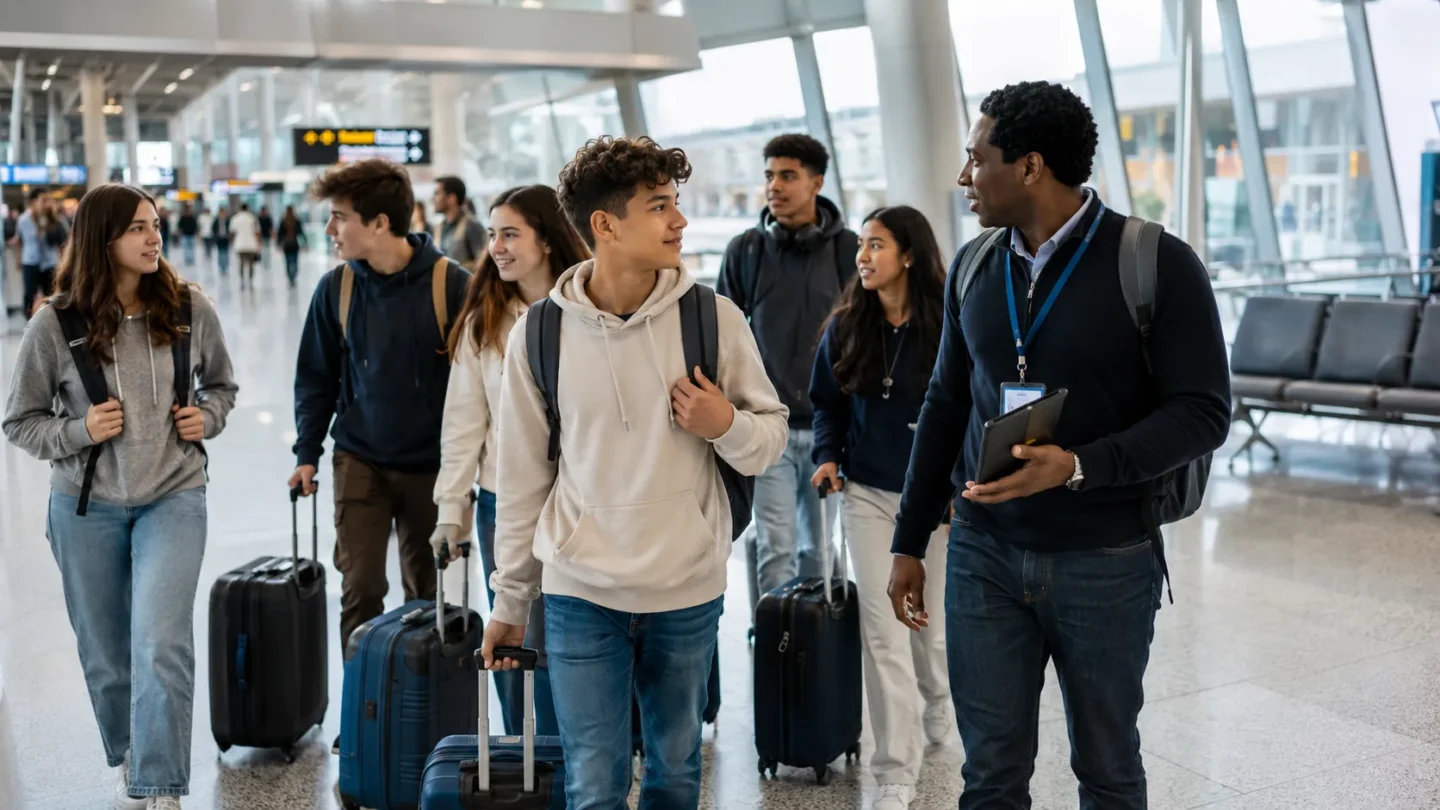
If they are travelling with a supervised group, make sure they understand the most important rule: follow the group's instructions and meeting arrangements rather than trying to navigate unfamiliar processes independently.
Is Group Travel Better for a Teen's First Trip Without Parents?
There is no single travel format that suits every teenager.
However, supervised group travel is different from travelling completely independently.
An organized teen programme may provide:
- Defined travel arrangements
- A planned itinerary
- Group leaders or programme staff
- Organized accommodation
- Scheduled activities
- Transport between activities
- Meeting points
- Other teenagers travelling in the same group
That structure can allow a young person to experience greater independence while still operating within an organized programme.
Families deciding which format suits their teenager can compare supervised group travel with more independent travel in this guide.
Group Travel vs Independent Travel for TeensWhat Should Parents Ask the Organizer Before Departure?
Before your child's first trip without parents, you should be able to understand how the programme works without relying on assumptions.
Consider asking:
- Who is responsible for supervising the students?
- How can parents contact the programme?
- Who meets my child on arrival?
- Where will students stay?
- How are rooms allocated?
- What does a typical day look like?
- What happens if my child becomes unwell?
- What is the emergency procedure?
- What are the phone and communication rules?
- How will parents know their child has arrived?
- Which travel documents are required?
- What happens if a flight is delayed?
- Are airport or station transfers included?
- What should my child pack?
- Who should my child approach if they have a problem?
Clear answers help parents prepare their child for the actual programme rather than an imagined version of it.
If you are still comparing programmes, our guide to choosing the right international summer camp covers supervision, accommodation, activities, destination, age groups, and other practical factors.
Common Mistakes Parents Make Before the First Trip
Parents usually want to make the experience easier, but sometimes doing too much can leave the child less prepared.
Packing Everything for Them
Help with the final check, but let your child participate. They are the person who will need to find the charger, toiletries, shoes, and other belongings later.
Giving Too Many Instructions at Once
A teenager is unlikely to remember dozens of warnings. Focus on a few useful principles: stay with the group, follow staff instructions, keep important belongings secure, and speak up when help is needed.
Avoiding the Homesickness Conversation
Talking about missing home does not mean you expect your child to struggle. It simply gives them a plan if those feelings appear.
Showing More Anxiety Than Confidence
It is natural for parents to worry. However, the departure conversation should focus on preparation and support rather than repeatedly listing everything that might go wrong.
Not Reviewing the Itinerary Together
Your child should understand the experience they are about to have. Do not keep all the practical information between the parents and organizer.
Embassy Camp Perspective: Independence With Structure
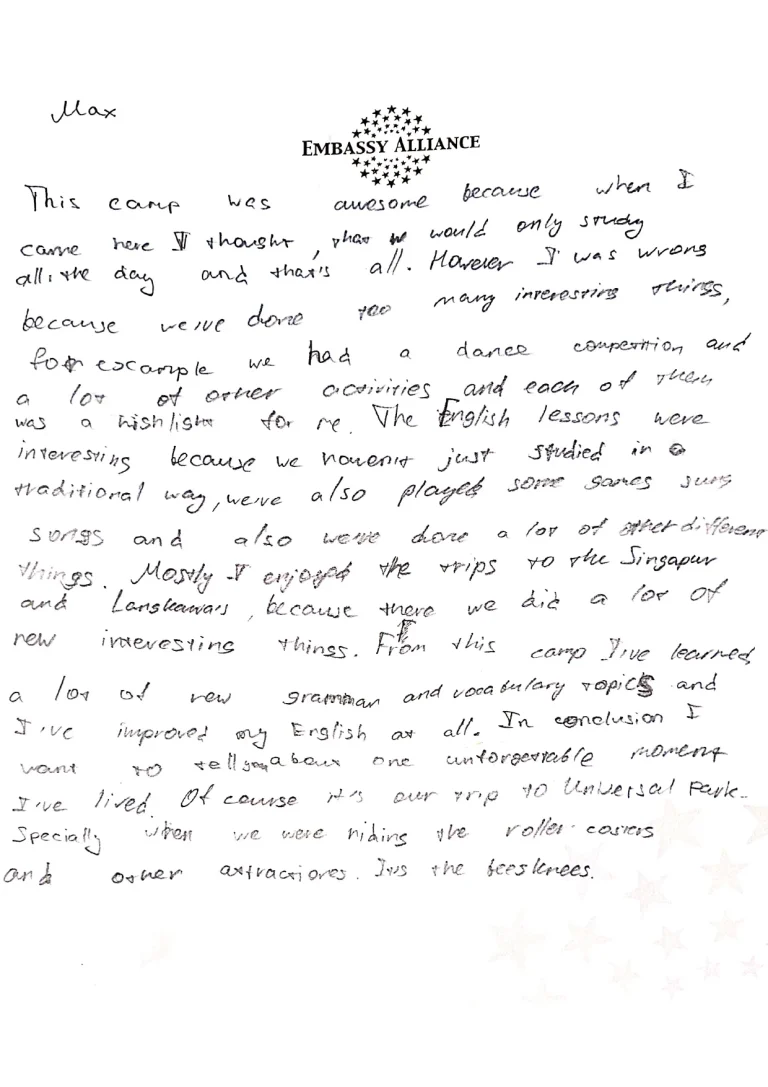
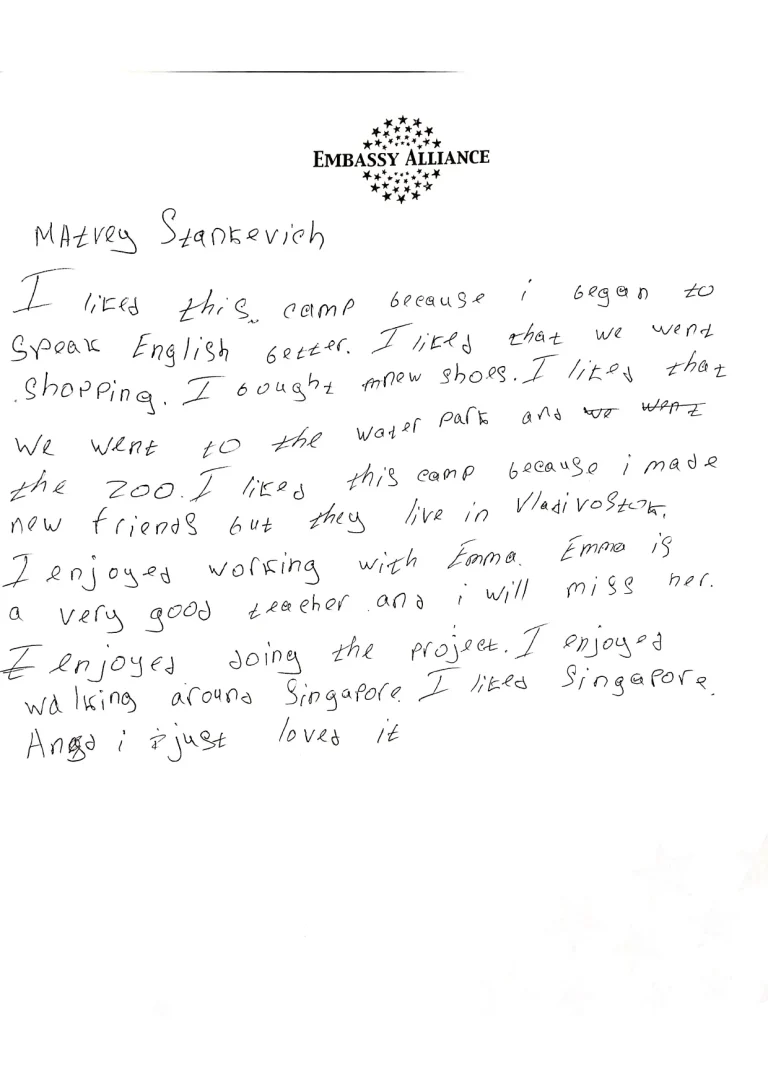
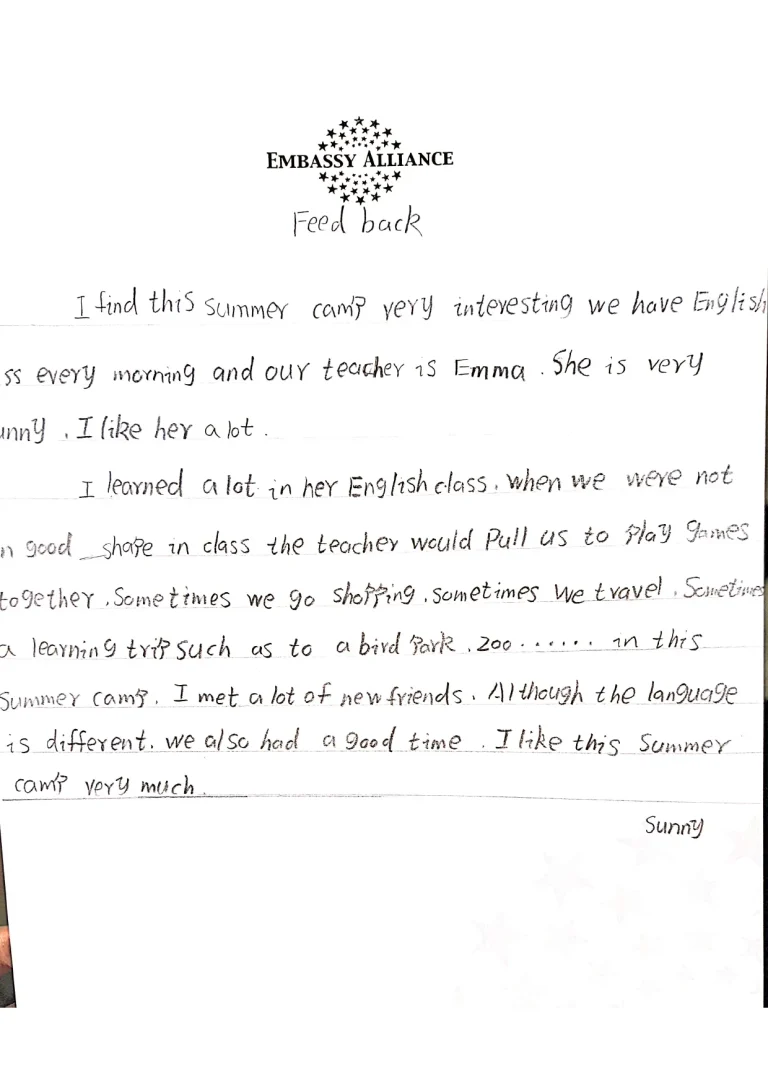
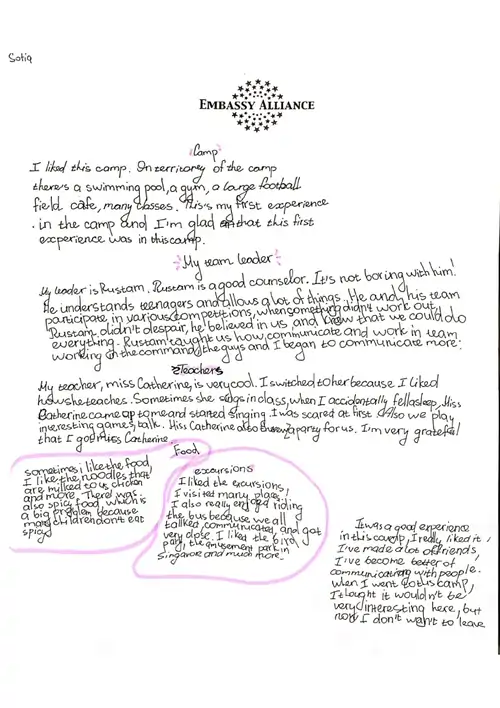
For many families, an organized international camp can provide a useful middle ground between travelling everywhere with parents and travelling completely independently.
During a supervised programme, teenagers may have opportunities to:
- Navigate a new environment
- Meet young people from other backgrounds
- Manage their personal belongings
- Follow a daily schedule
- Participate in activities independently
- Make everyday decisions
- Communicate with group leaders
- Adjust to shared accommodation
At the same time, the programme may include organized accommodation, activities, transport, schedules, and responsible adults.
The right programme depends on the teenager's age, confidence, interests, previous travel experience, and the amount of structure they need.
Families can explore Embassy Camp programmes and compare destinations, activities, accommodation, age ranges, and programme formats before deciding.
Final Thoughts: Preparing for a First Trip Without Parents
A successful first trip without parents starts well before departure.
Your child does not need to know how to solve every possible travel problem. They need to understand where they are going, manage basic responsibilities, know which adults they can trust, communicate when they need help, and feel involved in preparing for the experience.
Parents have an important role too.
Prepare carefully, verify the travel requirements, discuss realistic scenarios, agree on communication, and then give your child room to participate in the journey rather than managing every detail for them.
A first trip without parents can be an opportunity to practice independence in a real-world setting while still having appropriate support available.
Help Your Teen Take the Next Step With Confidence
If you are comparing supervised international camp options for a first trip without parents, explore Embassy Camp programmes by destination, activity focus, accommodation, and programme format.
FAQs About a First Trip Without Parents
What age can a child travel without parents?
There is no universal age that applies to every type of trip. Airline policies, destination rules, immigration requirements, and programme age limits can differ. Parents should check the rules for the specific airline, destination, transit route, and programme rather than relying on a general age guideline.
How do I prepare my child emotionally for a trip without me?
Talk openly about what the trip will involve, allow them to ask questions, discuss the possibility of homesickness, and make sure they know whom to approach if they need support. Try to communicate confidence while still taking their concerns seriously.
What should my child know before travelling without parents?
They should know the basic itinerary, accommodation, responsible adults, meeting arrangements, parent contact details, communication rules, and what to do if they feel lost, unwell, uncomfortable, or unsure.
How often should I contact my child while they are away?
There is no ideal frequency for every family. Consider the child's age, programme communication rules, trip length, and your agreed expectations. Establish the plan before departure so both parent and child know when communication is likely.
What if my child gets homesick?
Encourage them to talk with the responsible group leader, stay involved in activities, maintain the daily routine, and give themselves time to adjust. Parents should also understand the programme's homesickness and communication procedures before departure.
Should my child's first trip without parents be a group trip?
It depends on the child and the journey. A supervised group programme can offer more structure through organized accommodation, transport, activities, schedules, and responsible adults. Parents should compare that environment with the level of independence expected on other types of travel.
What documents does a minor need to travel internationally without parents?
The answer depends on nationality, destination, transit countries, airline, visa status, and who is accompanying the child. A passport and visa or entry authorization may be required, and some destinations also require parental consent documentation for minors travelling alone or without a legal guardian. Always verify the exact current requirements with official authorities, the airline, and the programme organizer before travel.