


Nearly all parents of teenagers have noticed that their children read slowly and inefficiently. Speed reading for teens seems like the perfect solution to this predicament, but what exactly is it? Can teenagers really master it? This article breaks down its definition, relevant scientific conclusions, practical techniques, and an implementation-ready improvement plan for 2026 that does not sacrifice reading comprehension.
What Is Speed Reading?
Speed reading is a set of techniques designed to help a person read written text faster than their natural pace, while maintaining an acceptable level of comprehension. Rather than reading every single word slowly and individually, speed readers train themselves to process text more efficiently through eye movement control, reduced inner vocalization, and broader visual focus.
The average adult reads at around 200 to 250 words per minute. Speed reading for teens aims to push that number significantly higher, with trained readers commonly reaching 400 to 600 words per minute on familiar material.
This is not a single trick. It is a collection of learnable habits and exercises that, when practiced consistently over time, rewire how the eyes and brain process written language. For teenagers juggling multiple subjects and increasing academic pressure, learning to read faster is one of the most practical skills they can develop during their school years.
How Fast Do Teenagers Read Right Now?
Before discussing improvement, it helps to understand where most teenagers start.
According to reading research compiled by Iris Reading, the average reading speed for teenagers is around 190 words per minute for contextual sentences. Teens in grades 7 and 8 typically read between 195 and 204 words per minute. By grade 12, the average rises to around 250 words per minute.
That may sound reasonable, but consider this: a high school student working through a 300-page novel for English class, a science chapter, and a history assignment in the same evening is dealing with tens of thousands of words. Even a modest improvement through speed reading for teens can save that student hours of study time each week.
The Science Behind Speed Reading for Teens: What Actually Works
Speed reading for teens has attracted significant skepticism over the years, and rightfully so. Many commercial programs have made wildly exaggerated claims, such as reading 10,000 words per minute with full retention. Research from psychological scientists, including a widely cited review published in Psychological Science in the Public Interest, found that comprehension and long-term retention declined sharply at speeds above 400 words per minute for most readers.
So this skill is not magic. But that does not mean it is useless. The same research makes clear that the habits holding most readers back are entirely fixable. Here are the three main culprits and the science behind addressing each one.
1. Subvocalization: The Inner Voice Slowing You Down
Subvocalization is the habit of silently pronouncing each word in your head as you read. Almost every reader does it to some degree. The problem is that this ties your reading speed to your speaking speed, which is typically around 150-200 words per minute.
Research from Speed Reading Lounge found that readers who successfully reduce excessive subvocalization can maintain 70 to 85 percent comprehension at speeds of 400 to 600 words per minute. The keyword is “reduce.” Eliminating subvocalization is neither realistic nor desirable. For complex new material, some inner vocalization actually helps with comprehension and memory. The goal of speed reading for teens is to stop subvocalizing every single word on familiar, simpler text.
2. Fixation: How Long Your Eyes Pause on Each Word
Every time your eyes stop while reading, that pause is called a fixation. Novice readers fixate on almost every single word. Skilled readers take in groups of words per fixation, covering more ground with each eye stop. Research on reading acceleration shows that training the eyes to recognize word chunks rather than individual tokens is one of the most reliable ways to increase reading efficiency.
Regression adds to the problem. Studies have shown that regressions, the habit of going back to re-read sentences you just passed, account for 10 to 15 percent of all eye movements during reading. Reducing unnecessary regression alone can produce a meaningful speed improvement for any teenager.
3. Vocabulary and Background Knowledge
One factor that rarely gets discussed in speed reading for teen content is how much vocabulary and topic familiarity affect reading pace. A teenager reading about a subject they know well will naturally read faster and retain more than when reading about an unfamiliar subject. Expanding vocabulary is one of the most durable long-term investments a teen can make in their reading ability, because it reduces the mental effort required per word.
Recommended Read: Mind and Memory Development Tips
Can Teenagers Actually Learn Speed Reading?
Yes, and speed reading for teens is often easier to develop than it is for adults. Here is why.
Adolescent brains are still highly plastic, meaning they adapt and form new habits more readily than adult brains. Teens are also typically motivated by clear, measurable progress, and this skill responds very well to measurement. A student who starts at 200 words per minute and reaches 320 words per minute after a few weeks of practice can see that number with a timed reading test and feel the improvement directly.
The realistic expectation for a teenager who practices consistently is a 1.5 to 2.5 times improvement in reading speed with maintained or improved comprehension. This is not a miracle, but it is meaningful. A teen reading 400 words per minute instead of 200 effectively cuts their reading workload in half.
7 Proven Speed Reading Techniques for Teens
These are the techniques with genuine research support and practical results for teen learners. Every one of them can be started today, with no special equipment.
1. Use a Pointer or Finger Pacer
Running a finger or pen under each line as you read forces your eyes to move forward at a steady pace. It also prevents regression, since your physical guide keeps moving even when your mind wants to double back. This is one of the simplest entry points into speed reading for teens, and students often see a speed increase on their very first session using it.
2. Reduce Subvocalization with a Distractor
One effective method for reducing excessive inner vocalization is to occupy the part of your brain responsible for speech sounds while reading. You can do this by humming softly, tapping a finger in a rhythm, or repeating a neutral syllable in your mind while your eyes move through the text. This sounds counterintuitive, but research backs it up. By occupying the speech loop with a neutral sound, you free your eyes to process words visually rather than phonetically.
3. Practice Chunking
Instead of reading word by word, train your eyes to land on groups of two or three words at a time. You can practice this by drawing two vertical lines on a printed page about one inch from each margin, then forcing your eyes to make only three fixations per line: left chunk, center chunk, right chunk. Chunking is one of the most recommended speed reading for teens exercises because visible improvement typically comes within days.
4. Pre-Read Before Deep Reading
Before reading a chapter or article in full, spend 60 to 90 seconds scanning the headings, subheadings, bold text, and first sentences of each paragraph. This primes your brain with a mental map of the content, which makes full reading faster and comprehension much stronger. Pre-reading transforms speed reading for teens from an isolated trick into a complete study system.
5. Timed Reading Practice
Set a timer for five minutes and read as much as you can while still understanding the content. Then test your comprehension by summarizing what you read in three to five sentences from memory. Do this daily. The combination of timed pressure and comprehension checking trains both speed and retention simultaneously, which is what makes the habit stick long-term.
6. Use a Speed Reading App for Drills
RSVP, which stands for Rapid Serial Visual Presentation, is a technique where words flash one at a time in the center of a screen faster than you can subvocalize them. Apps like Spreeder and ReadMe! Use this approach as a training drill. It is not ideal for actual studying, but as a regular exercise, it is excellent for breaking the subvocalization habit. Many speed reading for teens programs use RSVP training as a daily warm-up.
7. Build Your Vocabulary Consistently
Reading ten new words a day in context, not just in a flashcard list, compresses the mental effort required per page over time. A teenager who actively builds vocabulary through diverse reading (news articles, novels, science writing) will see reading speed gains that outlast any technique-based shortcut. Vocabulary growth and faster reading are deeply linked: the more words a teen recognizes instantly, the faster they can move through whole sentences.
What Speed Reading for Teens Cannot Do
Honesty matters here. This is a powerful tool, but there are real limits worth knowing.
Dense academic or scientific material cannot be read at full speed-reading pace without significant comprehension loss. Research consistently shows that retention drops sharply above 400 words per minute when the material is complex. A student should not try to race through a challenging chemistry textbook at 500 words per minute the night before an exam.
Speed reading for teens works best on narrative text, familiar subjects, long articles on topics the student already understands, and review reading of material already studied once. It is a tool to be used strategically, not a setting to leave on all the time.
Speed Reading vs. Efficient Reading: A More Useful Frame
For most teenagers, the goal should not be “how do I read 1,000 words per minute” but rather “how do I eliminate the inefficient habits making my reading slower and more tiring than it needs to be.”
Inefficient habits are the real enemy. Subvocalizing every single word, regressing constantly, fixating on each individual word, reading without pre-scanning, and reading without purpose all drag reading speed far below what the teen’s actual brain is capable of. Addressing those habits can double a teenager’s effective reading speed without any dramatic technique, and the improvements carry over into all academic subjects for the rest of their life.
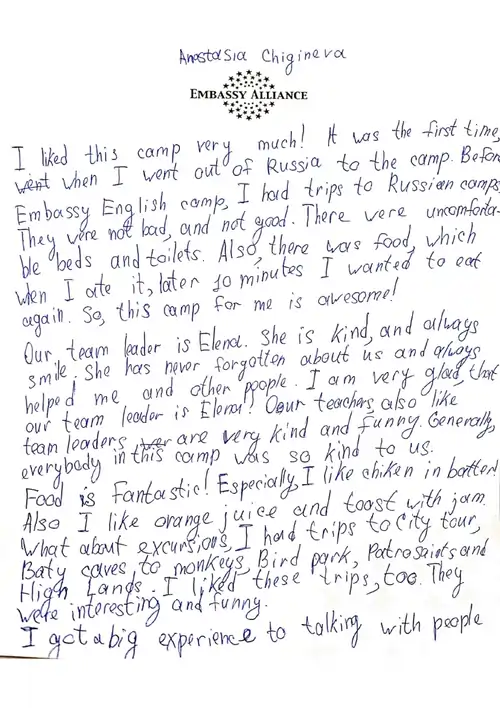
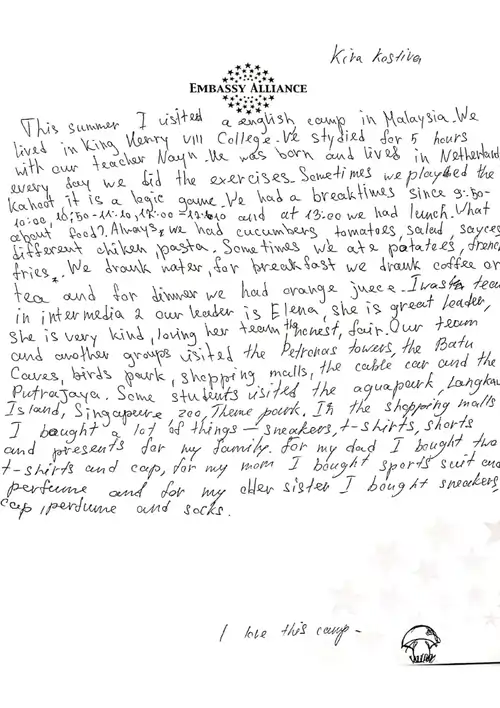
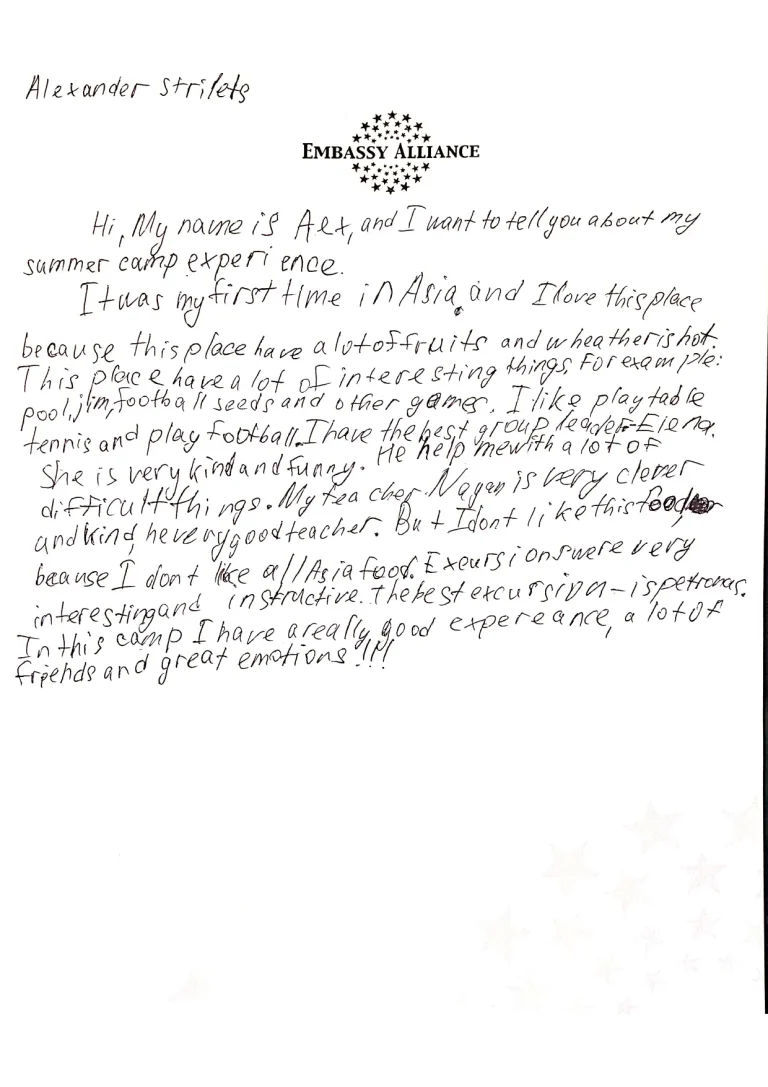
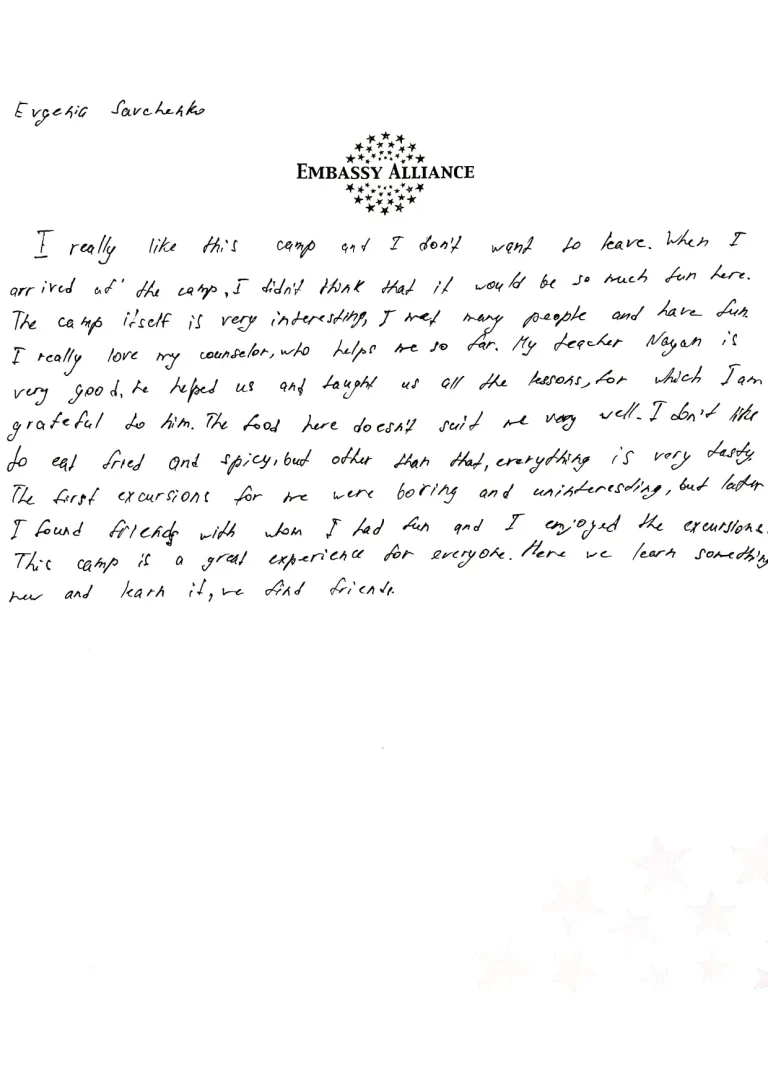
How Speed Reading for Teens Is Taught at Embassy Camps
At Embassy Camps, speed reading for teens is taught as a core life skill within the Smart Camp program. Rather than chasing extreme reading speeds, the focus is on building the correct visual and cognitive habits from the ground up: controlled eye movement, chunking practice, reduced subvocalization, and timed drills that make the improvement measurable and motivating.
By the end of the program, most participants see their reading speed increase by 1.5 to 3 times compared to where they started. More importantly, they leave with a skill that directly improves academic performance in every subject involving written material, which is most of them.
Teens who develop this skill alongside touch typing, mental arithmetic, and English fluency gain a combined academic edge that stays with them through university and beyond.
Frequently Asked Questions
At what age can teenagers start learning speed reading?
Speed reading for teens is suitable from around age 10 to 12 onwards, once a solid reading foundation is in place. Most teens in this age group have the vocabulary and attention span needed to practice and benefit. Earlier exposure is fine as long as the teen has solid literacy skills first.
How long does it take to improve reading speed?
With daily practice of 15 to 20 minutes, most teens see noticeable improvement within two to three weeks. Significant, lasting improvement typically comes after two to three months of consistent practice.
Does reading faster mean understanding less?
Not necessarily. Increasing speed by fixing inefficient habits like regression and excessive subvocalization often improves comprehension rather than harming it, because the reader engages more actively with the text. However, pushing beyond 400 words per minute on dense material does generally reduce retention, so speed should be calibrated to the type of content being read.
Can speed reading help with exams?
Yes, particularly for reviewing large amounts of material in a limited time. This skill is especially useful for re-reading content already studied, scanning long-answer questions efficiently, and processing reading comprehension passages in timed tests.
What is a good reading speed for a teenager?
A reading speed of 300 to 400 words per minute with strong comprehension is an excellent target. This is well above the average teenage reading speed of 195 to 250 words per minute and represents a realistic, achievable goal for most teens.
Is speed reading for teens different from speed reading for adults?
The techniques are the same, but teens tend to improve faster due to greater brain plasticity. They also have more to gain academically, since faster reading directly reduces the time spent on homework, exam preparation, and assigned reading across every school subject.
Final Thoughts
Speed reading for teens is a real, learnable skill grounded in the science of how eyes and brains process text. It is not a shortcut that lets anyone read 1,000 words per minute with perfect retention, but it is a practical toolkit that can help teenagers read 50 to 150 percent faster by eliminating the inefficient habits that hold most readers back.
Teenagers are particularly well-suited to learning this skill because of brain plasticity and their natural response to measurable improvement. The techniques that work best involve reducing subvocalization, training eye movement, expanding vocabulary, and building consistent reading habits through structured practice.
For teens looking to gain a meaningful academic edge, speed reading for teens is one of the highest-return skills to develop during the school years. And unlike many study tips, it is a skill that continues to pay dividends for decades.